
Residents say Casey councillors should have rejected the Cranbourne Golf Course housing redevelopment and left it to the State Government to intervene if it wished.
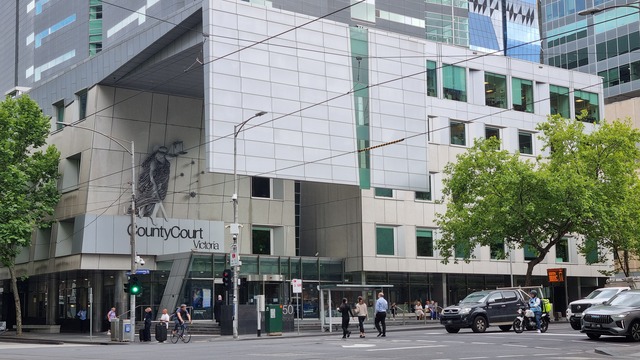
Community frustration has spilled over following Casey councillors’ unanimous approval of a planning permit to redevelop the northern half of the Cranbourne Golf Course into up to 499 homes on Tuesday 17 February.
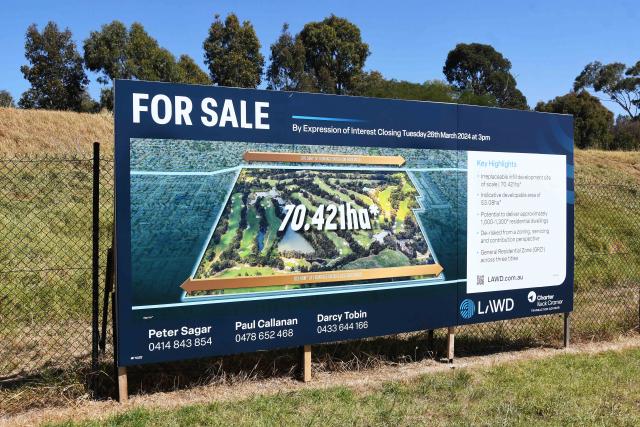
The permit for the southern half redevelopment hasn’t been lodged, but in the developer Brown Property Group’s vision, the entire golf course site would deliver more than 1000 homes.
Residents are saying their elected representatives failed to properly advocate for local concerns, and they should have formally rejected the proposal rather than approving it under State housing pressure.
“I’m really disappointed that the Council didn’t take a stand on this one and really allowed it to proceed,” local Ray Dalli said.
“They should have put up a stand. They seem to have conceded that the State Government were going to override them. Well, that’s what they (Casey Council under the administration) said with the proposed Hampton Park Waste Transfer Station: Oh, we approve the permit because the State Government would have overridden us anyway.
“The thing is, if they had said no, we want you to go back and revisit the density of it, and the developer would have gone straight to VCAT. And it’s the State Government that really got to justify it, but the thing is, at least it would have made a stand.
“It would have made a recognition that we’ve got representatives who have said, no, enough’s enough for this area.
“We’re not against the housing. Let’s have reasonable density. Bigger blocks, but fewer houses there to take the pressure off the area.”
About 121 dwelling lots out of 499 will be under 300 square metres. Some homes are proposed on blocks as small as 117 square metres.
The belief that councillors felt legally bound to approve the permit due to the State’s housing targets and planning rules was a recurring theme across interviews with the locals.
The belief echoed comments made at the February Council Meeting by Cr Kim Ross, Cr Dave Perry, Cr Lynette Pereira and Deputy Mayor Cr Michelle Crowther, who each acknowledged State housing targets and planning rules had effectively limited the council’s ability to refuse the proposal.
Cr Ross, whose ward contains the golf course, said at the meeting that this golf course redevelopment was a key part of the Casey meeting the State’s housing target of 28,500 homes over the next 30 years.
“If we do not meet the target, the State Government has the power and the will to come in and impose their own way of meeting it,” she said then.
Cr Perry made the comment then that the State’s planning system now more than ever takes decisions away from locals who feel they know their area best.
“There’s a push to build through what’s being framed as a housing crisis in Victoria and Australia. They’ve taken away as much power as possible,” he said at the meeting.
However, locals questioned whether that absolved councillors of their representative responsibility.
“I think the councillors feel that they have restrictions and need to act as a responsible authority. However, I still think they have got to act on behalf of the residents, not the council,” Ray said.
“They’ve got a distinction there. Council officers act for the council, but councillors need to act on behalf of the people. If they just think this project’s not right, they should put up a stand against, and it doesn’t matter what the majority seem to think in the council.
“I think if you’re really serious about concern for the residents, you should take a stance on it.
“I think everybody is so disappointed because the permit was called in, and the expectation was that there was going to be some pushback or major amendments to simply consider the tree canopy, the density of homes, and that seems sort of not to have been considered.”
Councillors added three amendments before voting unanimously at the February Meeting, requiring social infrastructure contributions to be spent locally, strengthening enforcement of the 30 per cent street and 20 per cent site-wide canopy targets, and mandating stage-by-stage tree protection plans to maximise retention during construction.
A local, who preferred not to share his name due to privacy reasons, believed the three amendments were not something major.
His impression was that councillors had “put themselves in a corner” after previously supporting motions calling for more affordable housing and smaller lot sizes across Casey.
“They’ve put themselves in a corner, and they couldn’t vote against the Cranbourne Golf Club,” he said.
“You can’t say on the same day we want smaller lots and more house blocks in Casey and then vote against this.”
Local Jill Nambu said her impression was that the State planning scheme ultimately dictated the outcome, leaving the council with little real authority.
“Without the State planning scheme changed, how much can the council actually do?” she said.
“They’re forced to make a decision. I really would like to see the State planning scheme changed so councils could protect us from the loss of tree canopy.”
She said that while some amendments were secured, they amounted to “very teeny tiny small steps” compared to the scale of development, adding that residents were angry and disappointed, particularly over tree loss and the absence of compulsory social or affordable housing policies in the permit condition.
A Lynbrook Residents Association (LRA) spokesperson said it recognised the need for housing but warned that concentrating landfill operations, a proposed Hampton Park Waste Transfer Station close to the golf course, residential expansion and an aged care facility also in close proximity raised serious questions about long-term planning, environmental buffers and resident wellbeing.
“While each project may be assessed individually, together they raise genuine questions about long-term planning, infrastructure capacity, environmental buffers, and the health and mental well-being of residents,” they said.
“These are not abstract planning decisions. They affect real people and real communities.
“Growth must be matched with careful, transparent planning that genuinely prioritises safety and long-term liveability.”
When asked why councillors chose to approve the development rather than push back and allow the State Government to intervene, Casey Mayor Cr Stefan Koomen said the council assessed all applications on their merits.
“By electing to make a decision on this application, Council was able to include a range of extra conditions that allow us to strike a balance between much-needed housing to keep pace with growth and demand and securing outcomes that reflect local priorities and benefit the community,” he said.
Star News previously reported community opposition to the development over the liveability, traffic congestion, the loss of green space, the capacity of local infrastructure, and the risk of landfill odour.
About 51 objections were received during the notice period.