The controversial Hallam Road landfill in Hampton Park will reportedly be closed to municipal waste as soon as 30 June 2027 – but questions linger over what happens next on the site as well as the region’s future rubbish.
The closure date of the South East’s largest landfill, which accepts waste from Casey Council but no longer from Greater Dandenong, was stated in a recent letter to Casey from South Eastern Melbourne Advanced Waste Processing chair Mick Cummins.
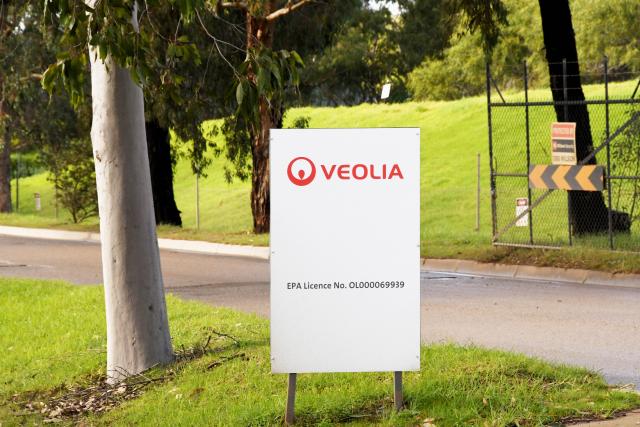
Landfill operator Veolia – which recently agreed to pay $1 million after unlawful odour emissions at the tip – told Star News that the landfill will be likely filled “sometime circa 2028″ based on current rates of waste received.
“Even without a precise date, the critical point is that Hallam Road, the last large landfill in south east Melbourne, is nearing the end of its life,” a Veolia spokesperson said.
“This is a high stakes moment. The next five years are crucial to developing Victoria’s waste infrastructure to meet the needs of the community.
“Melbourne urgently needs new waste and resource recovery infrastructure to avoid a waste crisis and divert as much waste from landfill as possible.
“This is why Veolia has invested in material recovery facilities, advanced food and organic processing sites, transfer stations, soil decontaminating plants, and energy from waste facilities. ”
Casey’s sustainability and waste manager Michael Jansen said no specific closure date had been provided to the council but “the 2027 date is not surprising”.
“Veolia have previously indicated via community updates that the final cell (cell 16) will be constructed by mid-2026.
“In published minutes of the Community Reference Group, Veolia estimated that this final cell would last in the order of 12 months.”
With the tip’s expiry looming, SEMAWP’s nine South East councils, including Greater Dandenong and Casey, have agreed to supply rubbish to a waste-to-energy incinerator in Maryvale.
The councils are locked into a “minimum tonnage” supply contract with an energy consortium including Veolia, diverting at least 95 per cent of household rubbish from landfill to the WTE plant for 25 years.
As part of the plan, about 550,000 tonnes of municipal residual waste, construction and demolition waste, and commercial and industrial waste would be taken to Veolia’s proposed transfer station at the Hallam Road site.
The waste would be then bulk transferred to Maryvale, which SEMWAP has stated won’t start operating until 2029-’30.
Mr Jansen said in the meantime, the council was “currently working to secure alternative waste disposal options” for the period between Hallam Road landfill’s closure and Maryvale WTE’s start.
Greater Dandenong Council stated it has not supplied Hallam Road landfill in the past five years, instead sending waste to a landfill about 60 kilometres away in Melbourne’s outer-west.
The council’s city futures executive director Sanjay Manivasagasivam said its general waste was first sent the South East Melbourne Transfer Station in Ordish Road, Dandenong.
“At SEMTS, waste material for recycling is separated and the remaining material is transported to Melbourne Regional Landfill (MRL) in Ravenhall for disposal.
“MRL will continue to operate for many years after the Maryvale waste to energy plant opens.”
The proposed Hampton Park transfer station’s future is also subject to a VCAT appeal launched by proponent Veolia.
After being approved by Casey administrators in 2024, it was rejected by the Environment Protection Authority due to “unacceptable” risks to human health due to noise and odour emissions and the proximity of neighbouring homes.
In a report tabled on 17 February, Casey officers listed key drivers for the project – the near-capacity of Hallam Road landfill, population growth, rising waste levies and landfill being at the “bottom of the waste hierarchy”.
As well as being more socially and environmentally friendly than landfill, waste-to-energy was the lowest-cost advanced-waste alternative the report stated.
It was equal in environmental and social benefits to options such as mechanical biological treatment with gasification/combustion.
End is nigh for Hallam Rd tip
by Cam Lucadou-Wells
Digital Editions
-
Successful Chinese Lantern Festival celeberations
The Edelweiss Casey Choir celebrated the Chinese Lantern Festival on Sunday, with an event titled Blossom of Harmony: Lantern Festival Gala. Many attended the Hallam…