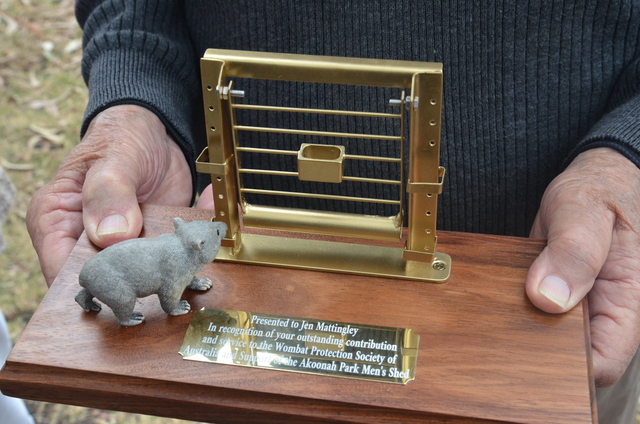
Akoonah Park Men’s Shed gave a unique honour last week to a woman who has dedicated many years to wildlife conservation, collaborating with the men’s group to create an innovative tool to protect and treat wombats.
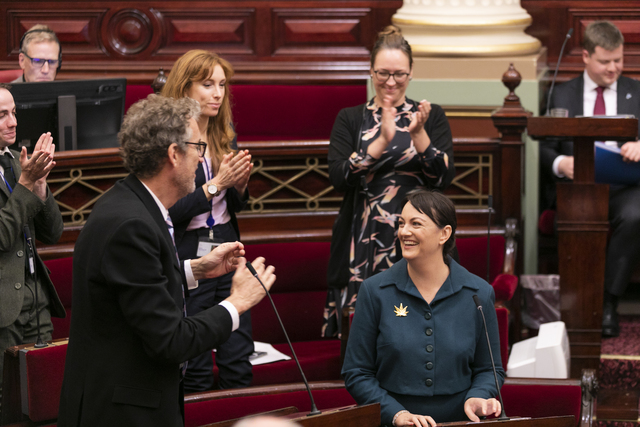
The men’s shed is usually a rowdy gathering of blokes, but last Thursday all the attention was on Jen Mattingley.
Ms Mattingley received special recognition from the men’s shed for her initiative and collaboration on a project to create wombat gates.
The project created specialised entrances for wombats to pass through fences, assisting their safe movement through urban and rural environments while limiting access for unwanted wildlife and pests.
Started in 2021 at the initiative of Ms Mattingley, the project has created 604 gates that are now in use across farms, government sites and residential properties.
“I feel very humbled over these 30-odd years,” she said after accepting the award.
“When you think about something that doesn’t seem like hard work, you’re happy to put in that effort and see the results.”
Ms Mattingley recently retired from volunteering with the Wombat Protection Society, where she was a director.
The wombat gates project came about after Ms Mattingley received a grant from the state government to support wombat conservation.
She turned her attention to gates, aiming to provide a fresh and effective design, as well as an easy and accessible option for landowners to implement.
The only concern was finding an organisation to manufacture them. Little did she know at the time that the answer would lie with a couple of blokes in Berwick.
After making inquiries, it was Jim Grills from the men’s shed who responded.
“This project wouldn’t have happened if I hadn’t been fortunate enough to meet Jim and have the support of the men’s shed, which has been just terrific,” Ms Mattingley said.
In collaboration with the men’s shed and the society, they developed a new design for wombats.
The short-legged creatures are known for their stubbornness. If they wish to go somewhere, most types of fences will do little to deter them.
A wombat typically burrows under fences, which is not so much of a problem until it compromises the security of properties and livestock and allows access for other wildlife and pests.
The design allows for easy installation within a standard wire fence and is weighted in a way that suits the wombat’s “bulldozer” manner.
The trick is to leave the gate open for a short period upon installation, allowing wombats to learn where the opening is. The gate is then closed, with the creatures, being habitual, learning to pass through the mechanism, while more skittish animals tend to avoid it.
The gate also includes an innovative capsule that can be activated when wombats pass through, administering medication to treat mange.
The highly contagious skin disease is one of the most significant threats to wombat populations.
Wombat Protection Society volunteer Ali Martin said Ms Mattingley was instrumental in mange management and other conservation efforts during her years with the society.
“Jen has been a true pioneer in wombat welfare and protection. She leads with kindness and respect, yet underneath that gentle approach is a quiet warrior,” she said.
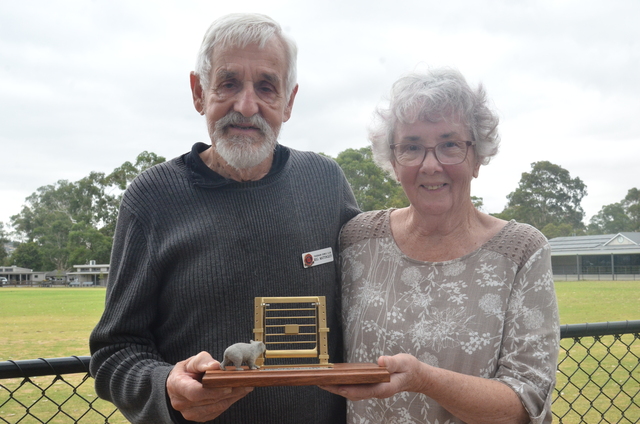
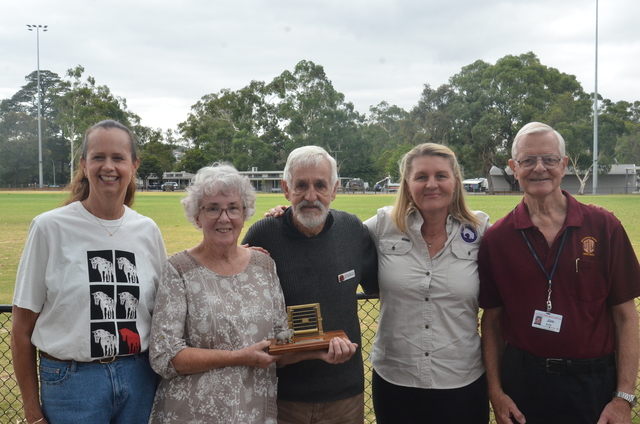
To honour Ms Mattingley, the men’s shed spared no expense, creating a custom award featuring a wombat and a gate, which was presented to her and her husband, Reg.