Performance data shows the Cranbourne Line has broadly tracked close to Melbourne’s network-wide averages for reliability in recent years, but commuters say delays, cancellations and peak-hour disruptions are making the service increasingly hard to trust.
Reliability on the Cranbourne Line has been a recurring topic in the community for years, reflected in the long-running Facebook group “Cranbourne line delays, cancellations and frustrations”, but the discussion was reignited after Tuesday 3 February’s afternoon-peak power fault, which left thousands of Cranbourne and East Pakenham passengers stranded on stalled trains for up to two and a half hours without air conditioning in 30-degree heat.
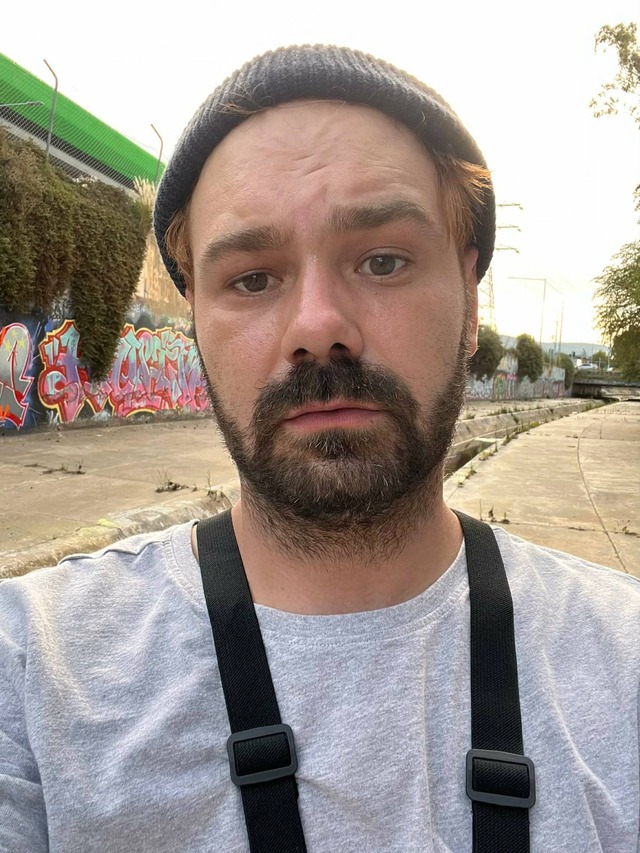
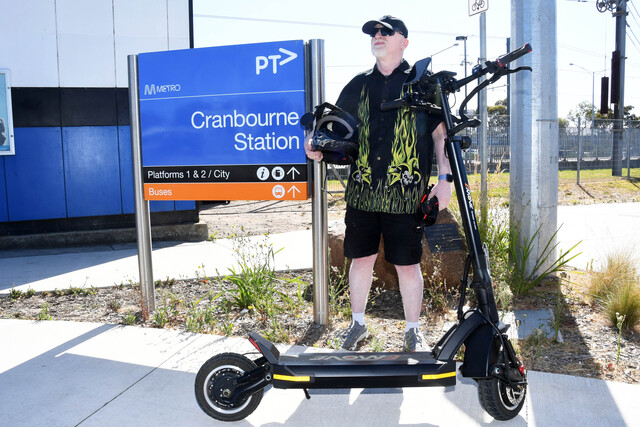
Long-term Cranbourne resident and Cranbourne Line commuter David Nakhla said he quit his job last November after years of frustration with taking the line.
“Just before Covid, I got PTSD trying to catch a train now on the Cranbourne Line because you just don’t know how long it’s ever going to take you now,” he said.
“My workplace was in Preston. With all these bus replacements and stuff like that, my journey time, especially when it was a trespasser, would end up being, say, an hour and a half when it runs smoothly.
“Could go up to two to two and a half hours. The longest has been nearly three and a half hours. Just one way.
“It would turn my journey from an eight-hour day to a minimum of 12 hours with transport. So, then I started trying to use Uber, but it was costing too much.”
Vision-impaired and reliant on public transport, Mr Nakhla had to give up his career because he couldn’t deal with at least four to five hours of travel a day.
“I will guarantee you, when I was working, it (the delay) would at least be three times a week. You’ll be stuck on the train for about 20 minutes,” he said.
“Once a week. Fair enough. But when it happens more than once a week, that’s an issue.”
He shared that the most frequent disruption was trespassing, followed by planned upgrades. He said there should be more Protective Service Officers at trespassing hotspots.
Cranbourne resident and a Greens member Payal Tiwari, who spoke from a commuter point of view, said she recently travelled from Cranbourne to the city on a weekend, and her journey took almost two hours because the connecting trains were not aligned properly.
She missed an hour of her work.
“I was just frustrated, to be honest. Two hours is too much in terms of if you want to get to the city. We’re not far away. I could have easily gone and taken a car and driven in. On the weekend, it takes a maximum of forty-five minutes from my house, 45 minutes,” Ms Tiwari said.
“I have a car, and I’m privileged that way. I can go and park in the city. But why should living in Cranbourne be a privilege if you have a car to come to the city?”
Speaking of the Cranbourne line reliability, she said a lot of the time, it had been delayed.
“It is just a common thing,” she said.
Ms Tiwari said she now avoids trains where possible.
However, not all commuters shared the same experience.
Local Steven Agius, who was caught in the 3 February disruption and took more than four hours to get home to Merinda Park, said it was the first major delay he had experienced in several years. He works from home three days a week.
“I’ve never had anything like this before,” Mr Agius said.
“I used to catch the train on the Lilydale Belgrave Line, and I’ve had more incidents on there than I’ve had on the Cranbourne Line.”
State performance figures show that in the past four years (2022 to 2025), the Cranbourne train has broadly tracked close to Melbourne’s metropolitan averages, with about 98.5 per cent of scheduled services delivered and 94.4 per cent arriving on time. That places Cranbourne roughly in the middle of the pack across Melbourne’s metro network, performing better than some lines, such as Craigieburn and Frankston, on punctuality, but behind higher-performing corridors like Glen Waverley and Sandringham.
Over the same period, around 1.2 per cent of Cranbourne services were cancelled, alongside smaller proportions of short-running, bypassed or skipped services.
While these figures do not rank Cranbourne among Melbourne’s poorest-performing lines statistically, they still translate into more than 2,200 cancelled services and over 1,500 short-run services during the period.
Public Transport Users Association (PTUA) spokesperson Daniel Bowen said for passengers in the outer suburbs, major disruptions often have a bigger impact.
“Options to use other lines and connecting buses are fewer and take longer,” he said.
Mr Bowen said power issues such as 3 February’s can be particularly tricky – the live cables that came down had to be made safe before passengers could be evacuated.
“The ‘High Capacity Metro Trains’ were accompanied by power and signalling upgrades, but clearly last week’s disruption shows more needs to be done to improve reliability,” he said.
“Ultimately, the State Government and Metro need to identify what went wrong last week and work to prevent similar incidents from happening again…
“Fundamentally, authorities need to ensure that the rail network is more reliable, so passengers have the confidence that they’re not going to get stuck on a train when they’re just trying to get home.”
Public transport researcher and policy advisor Professor Graham Currie said the Cranbourne/East Pakenham lines are not particularly more vulnerable than other lines. “The biggest delays occur in inner Melbourne; they occur more frequently, affect more passengers and cause longer disruption delays,” he said.
He said the Cranbourne and Pakenham services now form part of the Sunbury–Cranbourne–Pakenham corridor, Melbourne’s longest rail line, making it more exposed to delays and passenger-related disruptions.
However, he noted the corridor also operates on the city’s newest and most advanced rail infrastructure, with modern signalling and high-capacity trains, and should ultimately be among Melbourne’s most reliable lines.
“The residents of Cranbourne-Pakenham have every right and reason to complain about disruptions like this (3 February’s),” he said.
“However, they have been provided with Australia’s most advanced, newest and yes, the most reliable rail infrastructure Melbourne has yet seen.
“The rest of Melbourne has a long way to go before it can catch up with the quality rail services provided to Cranbourne and Pakenham Line residents.”
Speaking of 3 February’s disruption, Professor Currie said large timetable changes often brought short-term instability as drivers, signalling systems and operating patterns adjusted.
“No one yet knows the full details of the cause of the overhead wire/train pantograph entanglement in this case. My guess is it’s a symptom of running an entirely new system and network for the first time,” he said.
“We had the summer ‘Soft Start’ to try and isolate these kinds of failure, and I am aware that many were found and addressed.
“However, nothing can simulate the enormous effect of the ‘Big Switch’ when multiple lines are run at high frequency for the first time. Clearly, someone went wrong.”
The State Government was contacted for comment.