

Are you a farmer wondering how to pass the baton to the next generation? Across Gippsland, farmers are gathering at practical forums to learn about the legal, financial, and family complexities of farm succession planning.
With costs rising and many delaying retirement, planning early is now more critical than ever, Gazette journalist AFRAA KORI reports.
“I challenged participants to shift their mindset; Farm succession is a good problem to have.”
For many farming families, succession planning is becoming increasingly critical. Rising costs and financial uncertainty are forcing farmers to delay retirement or continue working without a clear transition plan. This creates pressure on both family dynamics and the long-term viability of the farm. Intergenerational handovers are rarely straightforward—especially when only one child wants to farm, or when assets aren’t easily divided. Without early planning, families risk legal disputes, missed financial opportunities, or the loss of hard-earned assets.
This month, two succession planning forums in Gippsland brought together farmers and industry professionals to tackle the legal, financial, and emotional complexities of handing over the farm.
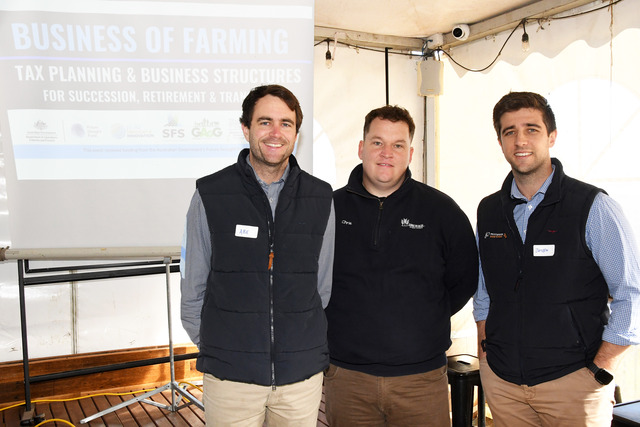
On 19 May, 45 farmers attended a session at the Robin Hood Inn in Drouin West, hosted by the Western Port Catchment Landcare Network and Southern Farming Systems. Speakers included lawyer Katherine Argentino, accountant Abe Schuback, financial adviser Jayden Allison, and agribusiness consultant Chris Jehu from Philipson’s Accounting, Financial Planning, who shared practical insights and case studies. Their advice on planning strategies and common mistakes provided valuable guidance for families at different stages of transition.
The following day, GippsDairy hosted a second forum, attracting service providers, milk factories and farmers at the Century Inn in Traralgon. The panel—Matt Harms, Colin Wright, and Kim Price—focused on how service providers can support smooth transitions through early planning and open communication. The session also highlighted the importance of aligning legal, financial, and emotional considerations.
Across both the Traralgon and Drouin succession planning forums, a consistent message echoed by all speakers was clear: “The ideal time to begin is as early as possible, often years before retirement or a potential succession event.”
Planning should involve all key stakeholders: family members, key staff, accountants, financial planners, and legal advisors. Farmers should start by defining their long-term goals for the farm, organising vital documents like wills and land titles, and initiating open discussions with their family.
“Succession planning is a gradual process, completed over time with a team of professionals and regular reviews,” Katherine said.
“By integrating succession planning as part of everyday business operations with good processes, record keeping and formal agreements, families can spread the cost and ultimately improve the value and viability of the business.”
Katherine Argentino, a lawyer from Argentino Legal, was a key speaker at the Drouin succession planning forum. She focused on helping farming families understand legal essentials like ownership structures, estate planning, transfer documentation, and risk management. With years of experience advising rural clients—particularly after the Black Summer bushfires— Katherine has seen firsthand how timely, structured planning can ease intergenerational transitions.
She described the audience as highly engaged, especially during case-based discussions. Farmers voiced relief at gaining clarity on complex topics, such as tax and legal implications. Many appreciated the alignment of expertise offered by the panel and found the practical guidance particularly valuable.
She witnessed many farming families grapple with the complexities of farm succession planning and put it in the ‘too hard basket’.
“I challenged participants to shift their mindset; Farm succession is a good problem to have,” Katherine said.
“There are many opportunities and benefits that come from taking proactive steps toward succession planning. Feedback highlighted that they now saw an urgent need to formalise plans and address overlooked legal or financial aspects, inspired by the actionable strategies provided during the session.”
Feedback of participants at these events indicates that rising costs make it harder to allocate resources toward professional advice while also placing increased pressure on farmers to continue working longer than planned.
“It appears that financial strain is increasingly leading to delays,” Katherine said.
“Delaying planning increases risks such as disputes, complications due to sudden incapacitation or death, and missed business opportunities. It also magnifies the potential for intergenerational disagreements and legal conflicts over asset distribution.”
“Procrastination is a major issue, often due to fear of family disagreements or underestimating the complexity of succession planning. Failure to update legal documents, unclear timelines, and poor communication can lead to disputes or missed financial opportunities.”
The younger generation often faces challenges such as limited access to financial capital, an inherited debt burden, and balancing the pressure to maintain the farm’s legacy with modernisation needs or personal aspirations.
Alternatives for older farmers include leasing farm operations to younger family members, part-time involvement, or diversifying income sources with off-farm investments to maintain financial stability.
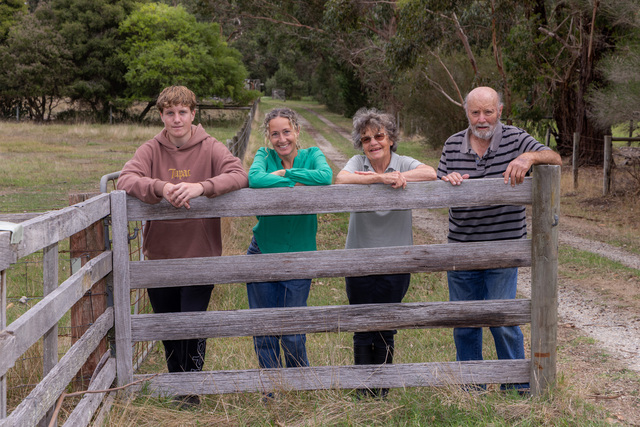
Michael and Sarah O’Brien, farmers and parents of a young family, attended the Traralgon succession planning forum to gain clarity as they prepare for the next phase of their farming journey.
Sarah said what stood out most was hearing real examples from other farmers and service providers.
“We’re about to take another step in the industry ourselves. It was really good information to go back to our accountants and solicitors and consider the future of our family business,” she said.
The forum’s collaborative environment also gave attendees a chance to connect with like-minded families and hear broader insights from organisations like Dairy Australia.
For the O’Briens, the key message was about embracing planning as an ongoing journey.
“You’ve got to enjoy the journey, but also plan for the future,” Michael said.
“It doesn’t matter what situation you’re in — preparation and planning are important. If you’ve got a little bit of a heads-up and a plan, it’s way better than just running into something blind.
Having a plan takes a lot of the stress out of it. Going through these things is stressful, but if you’ve got clear points, targets, and lines in the sand, it’s much easier to manage.
And when you actually plan it out, it’s like, yeah, I’m excited about the future.”
The forums highlighted that early, proactive succession planning is essential to protect farms, families, and futures in the face of rising costs and increasing complexity. Engaging with professionals and family early helps ease transitions, avoid conflicts, and secure the long-term viability of the farm business.