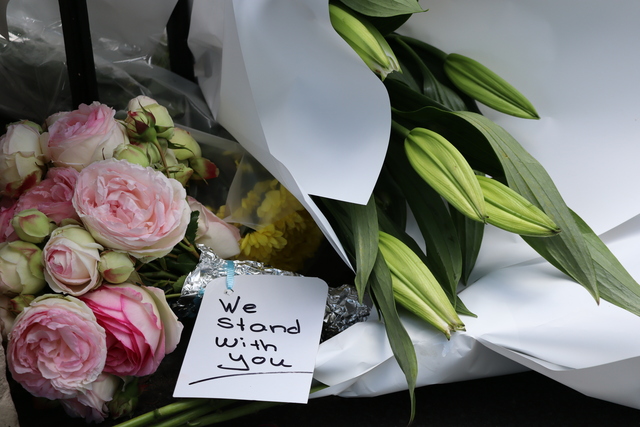
A week after the Bondi shooting, Australia has moved through familiar stages.
Shock.
Grief.
Anger.
Accusations.
And now, reflection.
As Hanukkah draws to a close, the immediate symbolism has faded, but the questions it raised have not.
We have named what we see.
Antisemitism.
Islamophobia.
Racism.
Radicalisation.
These words matter. They describe real pain and real danger. But naming the harm is not the same as fixing the cause.
And this is where Australia must be honest with itself.
What We Are Doing versus What We Are Avoiding
The response so far has been predictable.
Increased security around Jewish institutions.
Firearms reform.
Calls for curriculum changes focused on antisemitism.
These actions are not wrong. But they are reactive, not transformational.
Security protects buildings. It does not change minds.
Curriculum add-ons name prejudice. They do not dismantle it.
Legislation responds after harm. It rarely prevents the next one.
If we keep responding to violence by fortifying targets instead of confronting causes, we are not solving the problem. We are managing fear.
The Real Issue We Keep Sidestepping
We are treating symptoms as if they are causes.
Antisemitism is not the root cause.
Islamophobia is not the root cause.
Racism is not the root cause.
They are expressions of something deeper.
The real issue is this:
A growing vacuum of shared values, critical thinking, accountability and belonging is being filled by ideology, grievance and absolutism.
When people lack identity, purpose and agency, they cling to certainty.
When leadership avoids hard conversations, extremism finds oxygen.
When we walk on eggshells instead of setting standards, radical narratives flourish.
This is not about one community. It never has been.
The Risk of Institutionalised Victimhood
There is another danger we must name carefully but clearly.
When responses focus solely on protection and victimhood, we unintentionally reinforce a “them and us” mindset.
Communities become defined by threat.
Fear becomes identity.
And resentment grows quietly on all sides.
“As within, so without.”
What we repeatedly focus on becomes the mirror through which we see ourselves – and eventually, how we behave.
A society that sees itself primarily as wounded will eventually act from that wound. That is not strength. That is not resilience. That is not Australia.
Responsibility Is the Missing Word
This is the conversation politicians avoid.
Responsibility is not blame.
Responsibility is power.
A healthy society takes responsibility for the conditions it creates, the behaviours it tolerates, and the values it fails to teach.
We cannot outsource moral development to policing.
We cannot regulate cohesion through surveillance alone.
And we cannot keep reacting to extremism without asking how it was allowed to grow.
What Real Prevention Looks Like
If Australia is serious about preventing future violence, the work must shift upstream.
• Values-based education, not as a crisis response, but as a foundation
• Critical thinking, so young people can challenge absolutism
• Clear civic expectations, including respect for life, equality before the law, and rejection of supremacy in all forms
• Community responsibility, where neighbours know one another and step in early
• Leadership with backbone, willing to set standards instead of pandering
Security measures buy time.
Values build futures.
The Australia We Must Choose
At Bondi, amid fear and chaos, we saw something else.
Ordinary people who did not ask who deserved help.
Who did not calculate risk.
Who acted because it was right.
That instinct was not radical. It was Australian.
That is the identity we must strengthen.
Looking Forward to 2026
As this year ends, Australia stands at a crossroads.
We can continue naming harms while avoiding causes.
Or we can do the harder work of rebuilding shared values, clarity and purpose.
We do not need more labels. Labels like pro-Palestine and anti-Palestine.
We do not need more fear.
We do not need to live behind barricades.
We need courage.
We need responsibility.
We need leadership.
Truth be told, the future will not be shaped by the violence we witnessed – but by whether we finally address what allowed it to emerge.
That is the work ahead.
And that is the responsibility of 2026.