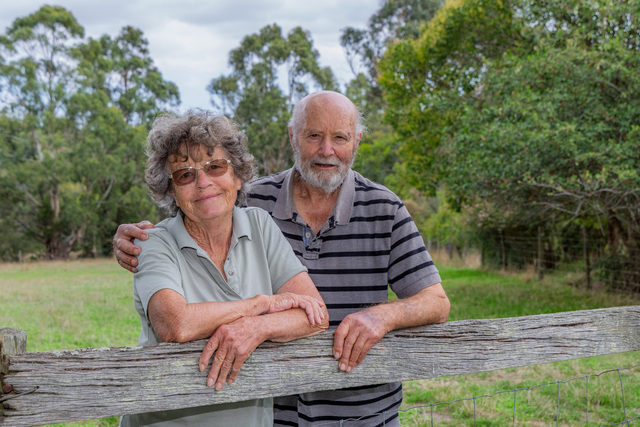




A Garfield couple has recently secured permanent protection for their property under a conservation covenant, ensuring its preservation for generations to come. Gazette journalist Afraa Kori reports how this land holds deep significance for the family and is central to their way of life.
“Some people ask if we’re worried about the impact the covenant will have on the resale value of the land but you can’t put a price on the survival of species and on living amongst such beauty.”
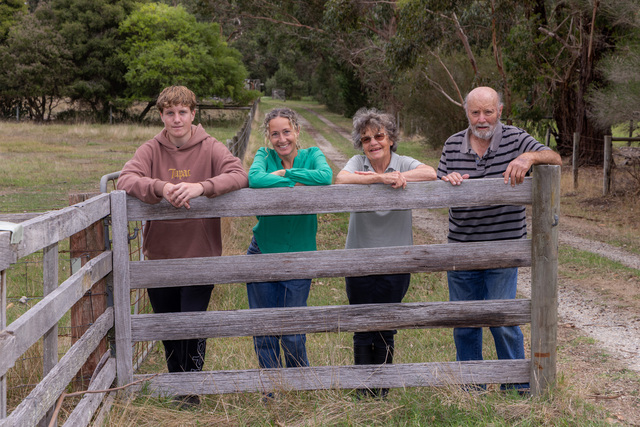
Peter and Maureen Cogo’s property in Garfield, was recently granted permanent protection under a conservation covenant. This legally binding protection, recognised by the Victorian Government through Trust for Nature, ensures the land remains safeguarded from development—offering the same level of protection as a national park while remaining privately owned.
It stands as the only conservation-covenant property in Garfield, with just one or two in North Garfield.
With Garfield experiencing increasing development pressures from urban sprawl, protecting this land is more significant than ever. It is one of approximately 1,500 conservation covenants in Victoria and likely one of the smallest, being just a couple of kilometres from town.
For the past 40 years, their hobby farm has been carefully revegetated, transforming into a sanctuary for two endangered species—the Southern Brown Bandicoot and Gang-gang Cockatoos—along with hundreds of other wildlife species.
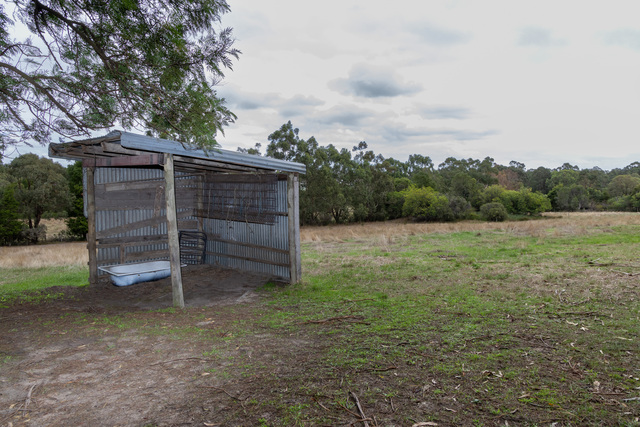
While the property once hosted horses and cows, it now supports a small flock of sheep and agisted alpacas.
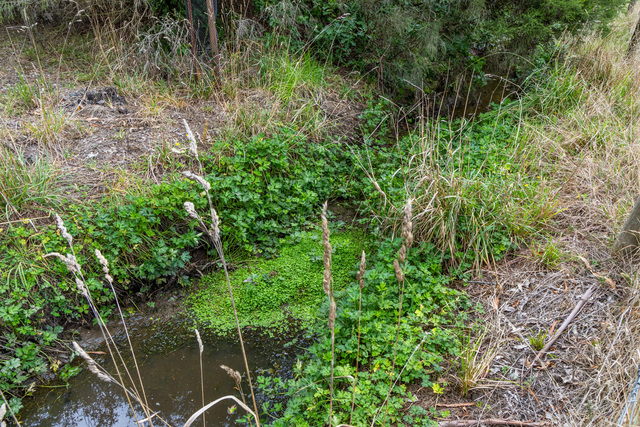
The dam, once a swimming hole for the kids, has since evolved into a peaceful refuge for waterbirds and fish, with water reeds now predominantly taking over the area.
Initially motivated by the need to provide shelter for the animals, Peter and Maureen began planting trees, which evolved into an interest in creating areas not used for grazing.
“We wanted a property that was healthy enough to support some livestock—sheep, cows, horses—and one that was undulating,” Peter said.
“To do that we knew we needed to plant a lot more trees to give the animals shelter. It was important that no matter which paddock they were in they had shelter.
Their conservation efforts have been supported by their collaboration with a local Landcare group, where they gained valuable knowledge about tree species and the significance of conservation
They purchased most of the trees as tube stock and planted native trees around the dam, transforming the area into what is now a “wildlife sanctuary”.
The property sits within a “swampy woodland” ecosystem that supports eucalypts, melaleucas (Tea-trees), wattles, and sedges and rushes.
They fenced off Tea-tree Creek to protect it from livestock and planted hundreds of native trees, which have matured and now provide valuable habitat for wildlife like bandicoots.
There is also a small piece of land on the south side of the creek which wasn’t accessible or useful for grazing and so they planted it out with native species. “It’s now a thriving little bushland with regenerating species”.
“We’re proud that we’ve been able to make even a small difference to wildlife in this area,” Maureen said.
“We’ve counted at least 40 different species of birds here, there would be many more that we don’t know. The trees are part of our life, we’ve always wanted plenty of trees around. You get so much more variety of animals when you have bush and trees.
“We hope neighbouring properties might also consider protecting their land so that there are corridors and connectivity of habitat, or at least look after the bush that’s there. Animals need safe habitat to move through to survive and our threatened species list is already too long.”
In addition to their bush block, which features remnant bush, “a rarity in the area”, the couple planted more trees to enhance it further.
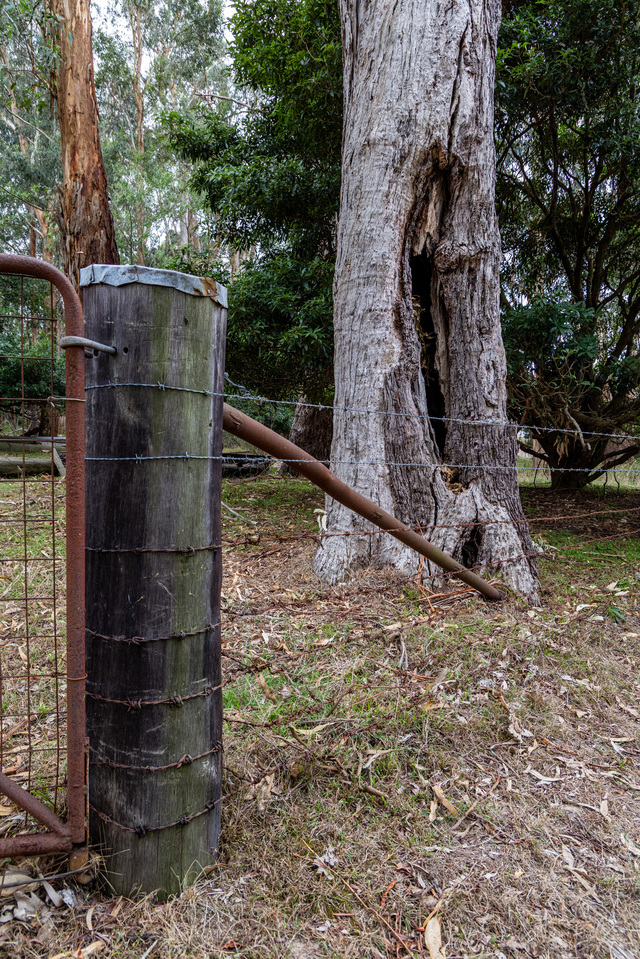
The mature trees, with hollows, now house kookaburras and other birds, highlighting the importance of mature trees for nesting. They’ve also spotted small gliders using the trees and little pardalote birds nesting near the creek. Shelter belts and other planted areas have helped individual trees build resilience, as seen in the contrast with isolated trees on neighbouring properties that fall in strong winds.
Despite the successes, protecting the land and maintaining the habitat comes with its challenges, especially when it comes to managing weeds, particularly blackberries, which are a constant struggle.
“Rabbits are also ever present but their numbers have never got to the stage where they are detrimental to the habitat,” Peter said.
“And of course keeping young trees alive when they are established and getting them through dry periods is hard work.”
The couple have worked hard to control pest plants as much as possible. They recently received a Liveable Communities Grant from Melbourne Water to revegetate the creek. Melbourne Water has come out to control weeds and plant ground cover, mid-storey, and upper-storey plants near the creek and in the area they revegetated to the south. They are also working to interplant Tea-tree thickets with other species.
Their daughter, Kathy has witnessed the incredible transformation of her parents’ property.
She spent six years on her parents’ property as a child and recently bought an adjoining block, which she is also revegetating with native species.
“It’s been amazing to see the transformation on my parents’ property,” she said.
“When I walk through Mum and Dad’s paddocks, it’s incredible to see how nature is reclaiming some of them.
The family’s decision to establish a conservation covenant was driven by a desire to leave a lasting legacy in conservation. The covenant ensures the land will be protected from development even after they no longer own it, providing peace of mind for the family.
“Some people ask if we’re worried about the impact the covenant will have on the resale value of the land but you can’t put a price on the survival of species and on living amongst such beauty,” Maureen said.
“Some wonder if we’re concerned if anyone will buy it because it has the covenant but I think there are a lot of other people who think like we do, who would value this place.
“In future this might be one of a few properties with habitat on it making it a unique private sanctuary surrounded by housing estates. We really hope not but we believe nature reserves like this one will always be sought after by those who appreciate them. A lot of people are trying to get back to nature.”
Peter added that over time they will have less livestock on the property and some paddocks will slowly return to more native vegetation.
“With the help of Melbourne Water we will continue to plant more, particularly ground covers, and continue work to protect the creek line. We would have liked to have put more trees in if we could, if our health allowed.”