


PRECEDE: The collaboration between professional golfer and coach Garth Cusick and renowned academic, plant pathologist, and soil microbiologist Dr. Mary Cole may seem unusual, but their combined expertise is paving the way for potential improvements to golf greens worldwide. Gazette journalist Afraa Kori reports that while the progress is exciting, they’re only just beginning.
BREAKOUT QUOTE: “We’ve solved tomorrow’s problem today. It’s up to others to choose whether to continue the traditional route or change.”
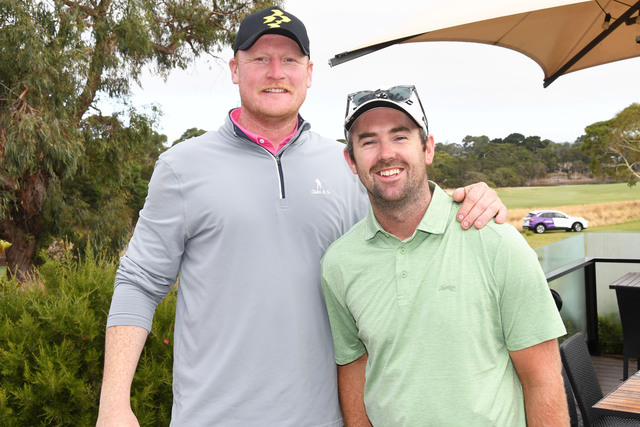
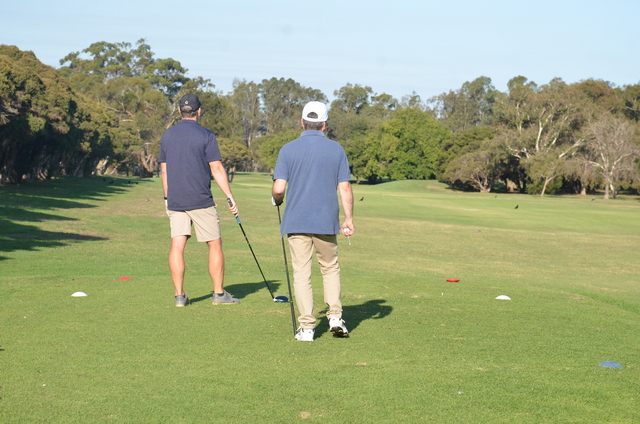
Having lived and taught golf in both Beijing, China, and Australia, Garth Cusick has always been committed to providing the best for golf players.
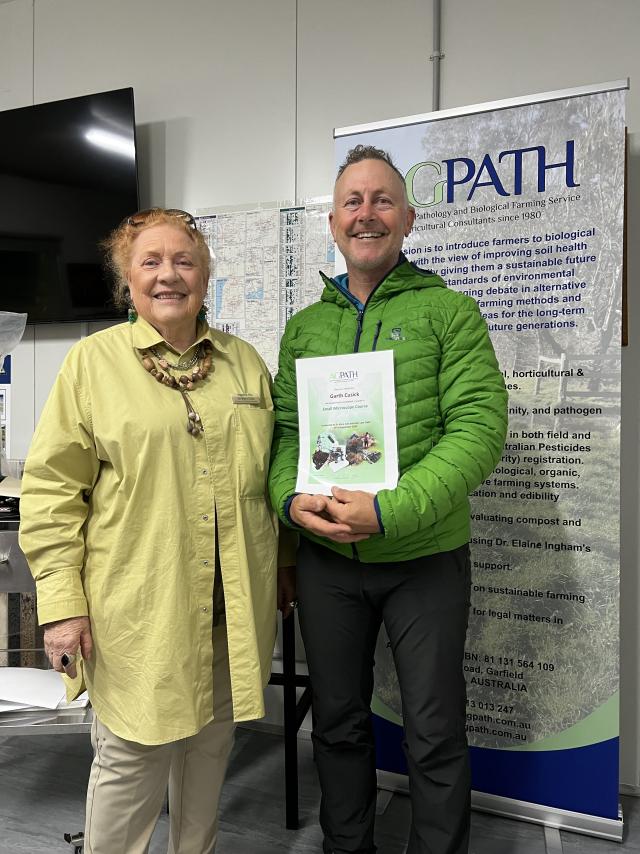
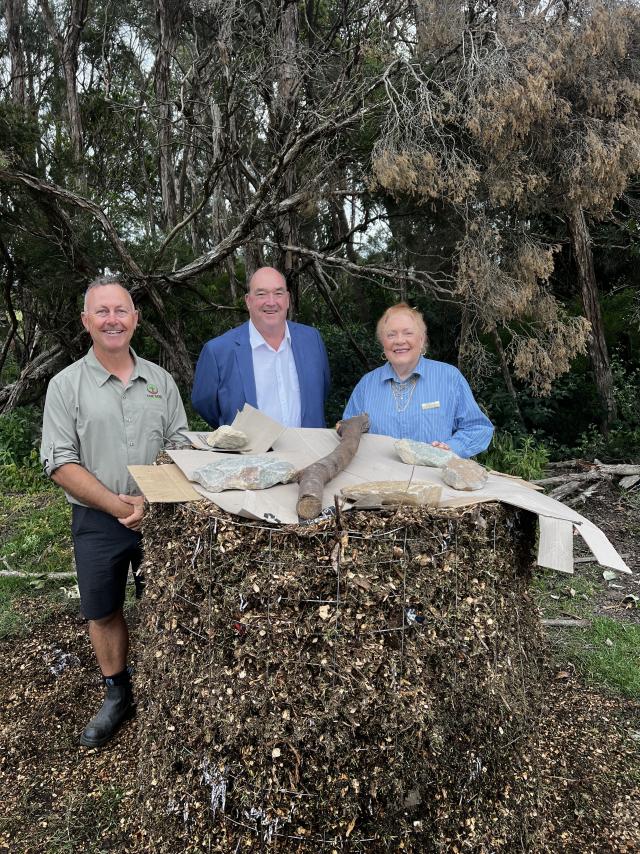
Dr. Mary Cole came to his attention through someone who attended one of her extracurricular education sessions. As an entrepreneur, Garth heard about her impactful talk, looked her up and reached out, saying “someone told me about your work. I’d like to use your ideas in a practical way on our golf course.”
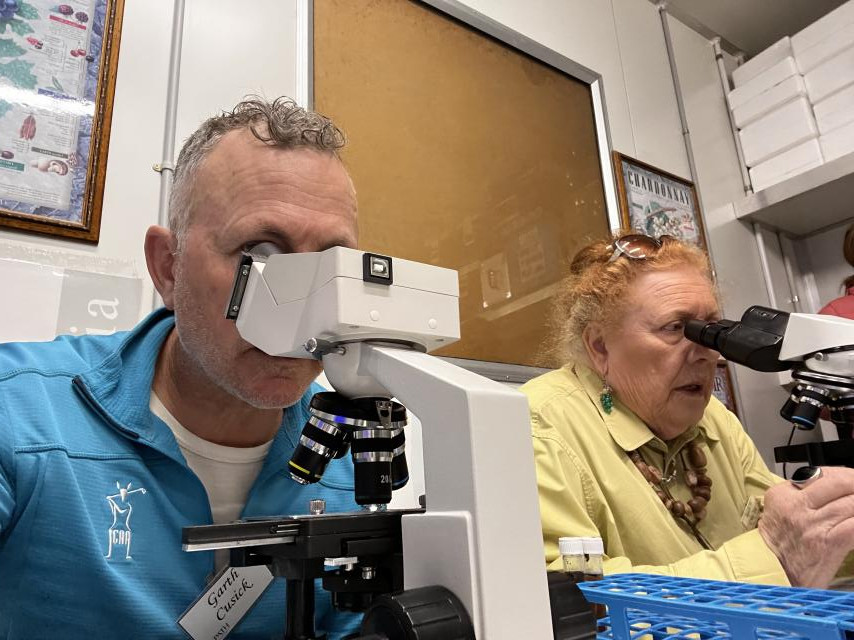
Garth and Mary then met over a soil sample and discussed the possibility of this change in the management of golf greens given the heavy use they receive almost daily and the incredibly artificial manner in which they are constructed and managed.
“My methods of biological management appealed to Garth and we started this relationship to prove that my methods can improve golf courses into the future,” Mary said.
“They will be healthier, more resilient in the face of a warming climate and be more efficient in water use.”
Garth has access to a Melbourne Water-owned golf club in Bangholme, which made it easier to apply Mary’s soil philosophies to improve the quality of the greens.
When Mary first visited the 300 square metres test site, she immediately warned him “you might fail”.
“She said no one had tried it before. I said “let’s go,” Garth said.
Despite the challenges including no drainage and the use of effluent water, Garth was determined to push forward, saying, “It’s my money, my time — I’m prepared to fail if we learn something.”
“The club allowed us to test as long as the green didn’t look visibly different from the others. If it started to suffer — if we couldn’t keep it alive and green without fungicides or pesticides, we had to stop.
The progress has been remarkable, with the test green going from the worst condition to its current state in just 18 months.
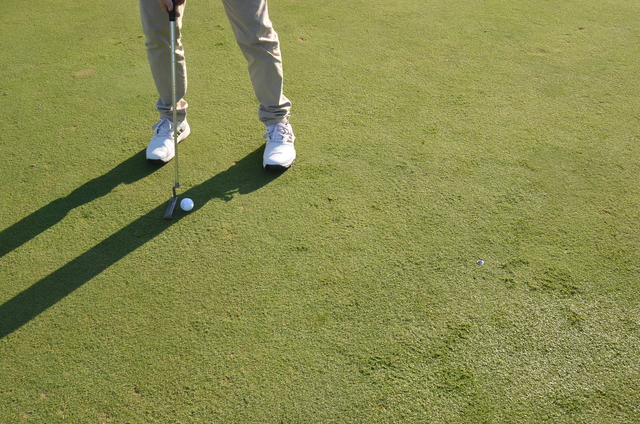
The before-and-after photos, though green in both, highlight the key difference: one was chemically induced, while the other thrives without chemicals.
“By removing synthetic chemicals from the management program of the golf course and introducing compost and compost tea we noticed very quickly the reduction in thatch in the grass,” Mary said.
“This is because synthetic chemistry kills most of the soil biota, especially the saprophytic fungi that break down dead and dying organic matter such as the grass clippings. We noticed that less water was required and the green was spongier when we walked on the grass. The colour was better – more vibrant green.”
Their focus isn’t just on improving soil but also on reducing the risk of contamination from synthetic chemicals.
“Golfers put their tees in their mouths as a habit. if a green has had synthetic chemicals such as herbicides, pesticides, fungicides applied then there is always a risk that contamination can occur,” Mary said.
“I am sure no one has died from this habit but it is one more exposure that people of today have to toxic chemicals in their daily lives.”
Working with golf clubs and their courses is new management especially here in Australia.
“We want to establish my soil health management throughout Australian golf courses and internationally,” Mary said.
“We are showing just with our first green, there is a difference in the response of the green to biology. Reducing costs of managing the golf courses is an advantage, making the environment more healthy and recycling water through wetlands, a waterways, all add to the circular economy and add to the esthetics of the course golf courses could become more profitable with reduced input costs.”
Mary and Garth are thrilled with the overwhelming support for their successful site and the launch of their business, ’The Soil and Turf Society.’
“We have a first job at Merimbula but have interests from Adelaide, Canberra and more. I am excited because it gives me the opportunity to show that repairing contaminated soil works on a golf courses just as easily as in an agricultural soil,” Mary said.
“It gives Garth the opportunity to show the world of golf that greens and fairways can remain playable without the addition of synthetic chemicals.”
“We’re using golf to prove this system works. Golf is happy, they’re paying for it, and now we’re exploring how this method can be applied to agriculture too. Whether it’s tomatoes, wheat, or pasture for cattle — it’s all about improving plant health using microbes,” Garth said.
A chemical-free approach on golf courses lowers maintenance costs, promotes healthier plants, and creates new income opportunities through composting. It enhances the quality of greens and fairways, with the added benefit of autonomous mowers operating 24/7. This model supports player health and makes golf courses more appealing to managers and councils, ensuring their long-term sustainability.
“For us and for golf in general — the premise of our work is to offer a solution,” Garth said.
“We’ve solved tomorrow’s problem today. It’s up to others to choose whether to continue the traditional route or change.
“We already know labor costs, fuel, and imported chemicals will rise. We don’t know if those chemicals will even be legally usable in future — especially as other countries like Germany and California are banning certain ones. That trend will eventually reach us.”
The long-term vision is for golf courses to operate off-grid, capturing and reusing their own water, generating energy through solar power, and managing the whole site without the use of synthetics.
This is not limited to golf courses and golf players; the wider community can also benefit from the shift from chemicals to biology.
“We produce more compost than we need, so the course can become a compost hub — even a learning space,” Garth said.
“We can invite members and the community to learn how we feed the greens using biology instead of chemicals. It becomes a way to teach better food and health practices too.”