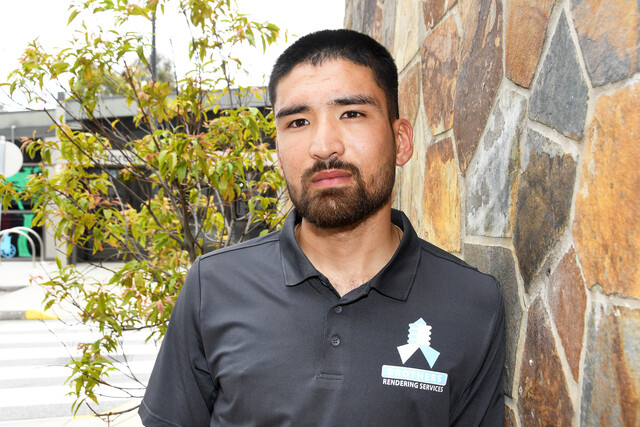
At just 26, Hallam runner Ejaz Ahmed completed the Great Southern Endurance Run (GSER) 100-mile (162 kilometres) ultramarathon for the very first time, finishing seventh in the male category and earning respect across the state and the community.
At 160 kilometres, he started to sprint.
“I was trying to get to the finish line. Some of the family members who had come to Mount Hotham were all cheering me. I felt all their energy, took it in, and then just started sprinting at the very end,” he recalled.
“Even when I’m doing normal runs in training, I always like to finish strong at the end, no matter how I’m feeling.
“I just started sprinting and finished those last two kilometres at a six-minute pace.
“I think that took me 30 minutes to finish those 5.5 kilometres, which was right under 30 hours.”
He didn’t cry. He didn’t collapse. What was on his mind?
“I’ve read a few of David Goggins’ books. During one of his races, where he was doing a 200-mile, I think, or 250-mile, he had finished the race, and as soon as he crossed the finish line, he did about 10 push-ups,” Ejaz said.
“In my head, I was thinking, I’m gonna cross the finish line. I’m gonna give them 10 push-ups to show them how much more I’ve got in it.
“I could’ve done that, but I just didn’t do that. I was like, no. That would be too much.”
For Ejaz, a construction worker who only started running four years ago and now trains after long days on job sites, the ultramarathon was a challenge.
“My idea of doing things is that you have to choose things that are that seem a bit unachievable for you,” he said.
“There are a lot of things that are easy and achievable. There are some things they really have to work hard for and put a lot of hours in just by themselves. There should be a bit of a challenge in it.
“There has to be a factor of unknown in it, whether you can do it or not, and find out.”
Held in Victoria’s Mount Hotham alpine region, the GSER is regarded as one of Australia’s most demanding trail events. The 100-mile course begins and finishes at The Moth, a windswept starting point perched about 1,600 metres above sea level, before sending runners through remote single-track, steep ridgelines and long ascents toward peaks like Mount Feathertop.
Aid stations are spaced widely, some more than 20 kilometres apart, requiring competitors to manage their own nutrition, hydration and pacing for long stretches.
Ejaz’s path to sign up for GSER gave the impression that it hadn’t followed the usual script.
He said he signed up two months before the November competition, and that was also when he first made up his mind to run.
Before that, his longest distance was 100 kilometres.
“The reason why I chose it was that I had already done a 100 km in March 2024. I didn’t have much fun in it,” Ejaz said.
“Half was good. Around 80 km, I felt like my legs were short and I couldn’t continue running. As much as I tried, I couldn’t muster more than just a walk. I pretty much dragged myself to the finish line.
“I felt good at the end, which was the last km over there. But other than that, I was pretty much relying on my poles.
“But this time around, I knew that I could do it because I had trained a bit better.”
“A bit better” meant “smarter”.
He trained longer and more deliberately, tailoring sessions to the conditions he would face and strengthening his mindset as much as his legs. On weekdays, he runs 10 to 12 kilometres, and on weekends 20 to 30, averaging 50 to 70 kilometres a week.
But for someone with that weekly workload, jumping to a 162-kilometre race was anything but typical. There must be some stories behind.
“I was going to go for redemption for the 100 km race in March 2025, but I was getting married a week before that, so I couldn’t do the race,” Ejaz shared.
“Last time when I did the 100 km, I wasn’t able to walk for two weeks. I really wanted to do it, but my wife wouldn’t let me because she would say, I don’t want you limping on the wedding day.
“So, I couldn’t do that, and I had all that energy built up in me, and I wanted to do something really challenging.
“Maybe I’ll do that in 2026, but before it, let me go and do something that would really be challenging and something scary.”
At 6am on Friday 21 November, in temperatures close to freezing, Ejaz stood at The Moth, the starting point of GSER 100 miles, about 1600 points above the sea level at Mount Hotham, feeling nothing but a strong urge to start.
The course would take him across some of Victoria’s highest and harshest terrain, including brutal descents, endless climbs, and a final ridgeline section that he described as “the worst moment” of the entire 30-hour ordeal.
Ejaz’s brother joined him as a pacer after 26km, guiding him through the night until the 112 km aid station at Alpine Getaway. That was the lowest point of the race.
“I thought I’d reached my limit. I lay there for 10 minutes. I told myself I’m going to sleep there for a few hours, and then I heard people talking around me not to let me sleep,” Ejaz recalled.
“I heard them. I was like, I’m not sleeping. I’m up. Don’t worry. I won’t be sleeping. I just changed my mind at that point.”
He forced himself upright and walked back into the darkness—alone.
What happened next stunned even him.
On the long downhill after Alpine Getaway, his legs came back to life.
“I felt good again. I started jogging downhill and slowly picked people off one by one.” One runner looked at him and said, “You’ve woken up from the dead.”
Later, he began climbing again, towards Mount Feathertop, one of Australia’s highest and steepest peaks.
The climb went on for hours, but Ejaz knew he couldn’t stop.
“I knew that there were going to be hungry forces behind me,” he said.
“They will always want to chase that, get your position. They just have to keep going. I remember there was one point I was thinking, if anybody’s going to catch up to me, they’re going to have to feel the same pain I’m feeling or more.
“You can’t sit down. If you sit down, people are going to catch up. And you’ve gone through all that, and you can’t let that happen.
“I’ll start running, I’ll jog, yell at the mountains, swear at the mountains sometimes. There are a lot of beautiful views, but at that point, I was sick of the views. I don’t want views at the very end. I just want to go downhill again. But there was no downhill. My mind was getting distorted because I had been up for so long.”
When Ejaz reached the final aid station, his brother ran up to meet him. The two hugged and got emotional.
“He just told me to be strong. Don’t show any emotions because it’s just going to bring the morale down,” he said.
Five and a half kilometres remained. Ejaz wanted to finish under 30 hours. That was all that mattered now.
Later, in a hot shower, he just sat there, feeling everything.
“As if I hadn’t felt enough,” he joked.
“It was a feeling to cherish even though it was painful.
“I couldn’t really walk up afterwards. My left knee had swollen up like a balloon, but I just hadn’t noticed at all.”
Eja is already planning his “redemption run” at the Buffalo Stampede 100 km next March and is eyeing another 100-mile event in the Grampians.
But his bigger goal is to inspire others to try running.
“I always encourage them because I find that running really does build character,” Ejaz said.
“It’s nothing like other sports. You’re going out there by yourself on a heat of summer day, or a cold morning or when it’s raining or when you don’t want to do it.
“I think running to the point where you’re feeling pain and pushing your boundaries is just teaching you life lessons.
“Even when those times do come, adversity, you would at least be ready for it to a point where you can sit back and see what it is and then try to solve it from there or try to see what’s the best way you can go about it.”