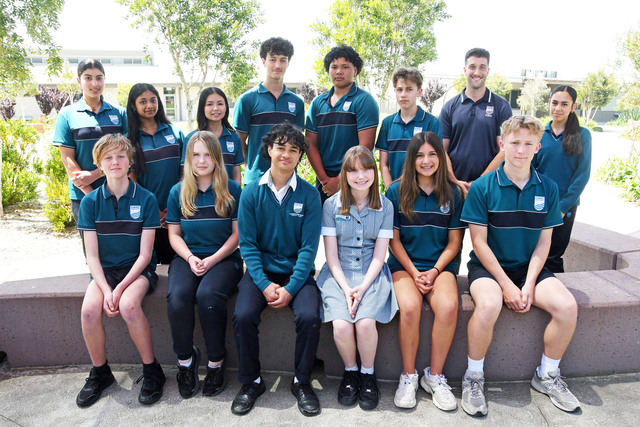
Cranbourne West Secondary College students have recorded exceptional growth in this year’s National Assessment Program – Literacy and Numeracy (NAPLAN), placing the school among the strongest improvers in Victoria.
The school celebrated its results on Facebook after being named one of the top four Melbourne secondary schools for NAPLAN progress in the Herald Sun, and one of 41 stand-out Victorian schools in The Age. It is the only school in the Cranbourne area to appear on both lists.
NAPLAN data shows the school’s Year 7–9 cohort lifted its average numeracy score from 523 in 2023 to 590 in 2025, an improvement of about 13 per cent in just two years. Around 79 per cent of students recorded above-average progress when compared with students who had the same starting score and similar background.
Writing achievement also strengthened, with the cohort improving from 530 to 590, an 11 per cent rise that Australian Curriculum, Assessment and Reporting Authority (ACARA) categorises as “above” similar-background students.
Principal Rob Duncan said the school’s long-standing focus on academic growth, rather than raw results, had been central to its approach.
“We really want kids to grow. This result is our greatest measure of success because we can’t control what the kids are like when they come in at Year 7, but what we can control is what we do with them when they’re here,” he said.
“We get students of all different abilities to come to the school, as most schools do. Our main role is to actually try to grow them as much as we can in the time that we have with them.”
The principal said they were very excited and very proud of the effort that their students and staff had put in.
“We’ve worked hard to try to improve students across all the domains,” he said.
“I think students are very pleased. It’s a good acknowledgment of the effort that’s been put in by the students and also by their teachers, and their parents.
“It’s very much a team effort to try to get results like that, and to be in the top four secondary schools for growth is a real achievement.”
Mr Duncan especially wanted to point out the numeracy result.
“Our numeracy result stands out above most of the others. There’s a lot of work over a number of years that’s gone into producing that,” he said.
The school mandates five hours of mathematics or numeracy per week — above the Department requirement — and targets additional support to students who arrive in Year 7 a little behind.
We have a program that’s a small group program with probably up to six students per class who do really intensive numeracy, and they’re the ones who generally actually make the greatest growth,” Mr Duncan said.
Writing growth has also been a major focus, particularly in persuasive and creative writing.
“One of the things we really try to do with our students is to develop writing stamina, so that they can actually write for periods of time because, obviously, that’s really important when you get to the senior years of school, where you actually have to write a number of essays in three hours and your final exams and those types of things,” Mr Duncan said.
The school also achieved a 99 per cent NAPLAN participation rate this year, above the national average of 95 per cent.
“We have basically every student who can sit the test,” Mr Duncan said.
“That’s critically important because we have students who come from primary schools where they’ve never sat NAPLAN before. Maybe the parents didn’t want them to, or maybe the kids felt anxious about it.”
He said familiarising students with formal assessments was an important life skill.
“Later in life, they’re all going to want to get their driver’s licence or do other things that require testing. So, they might as well practise being tested as much as they can,” he said. “Our aim is to provide a supportive, non-threatening environment, but also an understanding that if you attend this school, it’s expected that you’ll participate.”
Mr Duncan said the school would continue to look for ways to strengthen literacy and numeracy outcomes across all year levels.
“We would love to have them all higher, but it really depends on what students are like when they enter Year 7,” he said.
“If we can keep growing students as best we can, we’ll continue to see great results when they reach Year 11 and 12.”
Cranbourne West Secondary College opened in 2021 and now has more than 1600 students.
“We have a very committed teaching team, a strong culture around learning, good routines and lots of rigour in how we teach,” Mr Duncan said.
“And we have terrific kids who have bought into that culture of wanting to learn.”