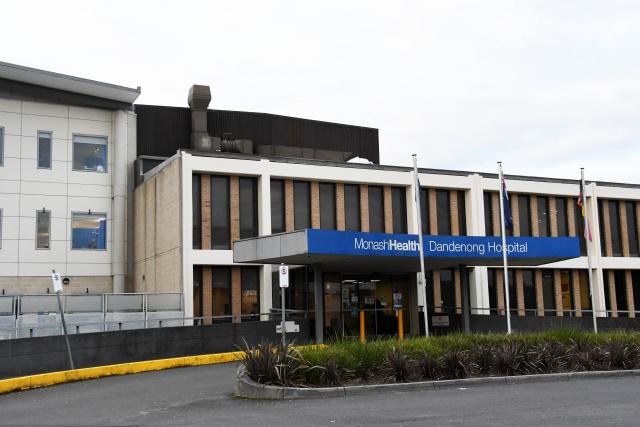
Monash Health has defended its handling of mental-health patients in the emergency departments despite its Casey and Dandenong hospitals having the state’s lowest rates of timely transfers from emergency departments to mental-health beds.
The response follows Star News’s earlier report showing 0 per cent of Casey Hospital patients and 4 per cent at Dandenong were admitted to a mental-health bed within eight hours of presenting to emergency during the final quarter of 2024-25 – far below the state average of 44 per cent.
Cranbourne resident Ray, whose daughter has been a frequent patient at both hospitals, says they’ve languished up to 36 hours in the Casey Hospital ED.
The issue for him is not whether care starts, but how long it takes for that care to start.
He said Casey Hospital’s emergency department is often overwhelmed, with most of its 25 cubicles occupied.
“You sit in the waiting room for eight hours or so before you even see a doctor, and then they say that we need to sew up your arm or you need to see the mental health people,” he said.
“You have to wait for a few more hours to see the mental health people.
“Then maybe, they won’t come to see you until you’ve got a cubicle. They can’t get you into a cubicle because the emergency department’s full up, and they’ve got nowhere to put medical patients until a bed frees up on the ward.
“You just end up sitting there forever. And if you’re going to be transferred out, you’ve got to get that bed first. You’ve got to get mental health clearance.
“Then they’ll arrange transportation if there’s a bed to transport you to; they don’t have any idea when transportation is going to turn up. And no visibility of any of that stuff.
“You might sit there for a day and a half waiting for a bed….and then you will be transferred.”
Ray said there are not enough beds in the emergency departments at Casey Hospital.
“If you go up there most nights, it’ll be absolutely full in the waiting room with people lined up out of the corridor and up the hallway,” he recalled.
Ray said his daughter was referred to Monash Health’s community mental-health services, first the Early in Life Mental Health Service when she was younger, then the Youth Consultation and Treatment Team (YCTT).
These services offered psychiatric reviews and therapy, but had limited capacity, and she was eventually discharged and told to find a private psychiatrist.
For the daughter, private care proved unaffordable.
“If I said I’d been to the emergency department 300 times in seven years, I wouldn’t be lying. A good proportion of those times, what happens is you get turned around pretty quickly and sent home,” Ray said.
“If you are in the community mental health service, as we were, we would be sent on our way with the promise that somebody from the community mental health service would connect with us within 24 hours or so.
“95 per cent of the time, that never happened. Nobody ever called.”
Monash Health’s catchment covers one of Victoria’s fastest-growing areas, stretching across Casey, Dandenong and Cardinia.
In a statement, a Monash Health spokesperson said that at the EDs, mental health care begins the moment a patient is identified as needing support.
“Our Emergency Psychiatric Service, located within the emergency department, identifies and actively manages patients who need mental health assistance. This ensures patients receive specialist care and support before they transition to a dedicated mental health bed,” they said.
“Monash Health remains committed to working with the Victorian Government to ensure every member of our community receives the care they need to live their best possible life.”
Monash Health declined to comment on why such high numbers of Dandenong and Casey mental-health patients were staying in ED for beyond eight hours.
VAHI statistics suggest that the bed occupancy rate for the mental health unit in Casey Hospital was 72 per cent for the same quarter. It was almost full at Dandenong (99 per cent occupied).
On average, patients stayed nearly a fortnight in Dandenong and Casey mental health beds, marginally longer than the rest of metro Melbourne.
At Dandenong, 22 per cent of patients occupied beds for 35-plus days. This was more than double the rate of other Melbourne units.
The State Government was contacted for comment.