CRANBOURNE STAR NEWS
Home » Kickstarting biosecurity practices

Kickstarting biosecurity practices

Following recent detections of foot-and-mouth disease and lumpy skin disease overseas, biosecurity has hit the headlines, with national and state biosecurity measures front and centre.

Whether it be a dairy farm, a hobby cattle herd, a pet alpaca, or even just an irrigation paddock, biosecurity management and farm biosecurity planning can help protect your property from biosecurity threats.

Biosecurity risks increase when livestock, people, vehicles, equipment and supplies are brought onto a property, moved around the property, or leave the property.

A biosecurity management plan is a document that outlines the processes you have in place to reduce the risk of disease, pests, or weeds impacting your property.

While developing your plan, the following practices can be quickly enacted now on your property:

* Request National Vendor Declarations (NVD) and animal health statements. Ask questions about animal health, vaccinations, disease and treatment history.

* Ensure your Property Identification Code (PIC) details are up-to-date, and livestock movements are uploaded on the National Livestock Identification Scheme (NLIS) database. PICs are free to get or update your PIC on the Agriculture Victoria website: agriculture.vic.gov.au/PIC.

* Isolate livestock moving on to your property from others, using a yard or holding paddock. This allows time to empty the gut and enables you to monitor for signs of disease or sickness.

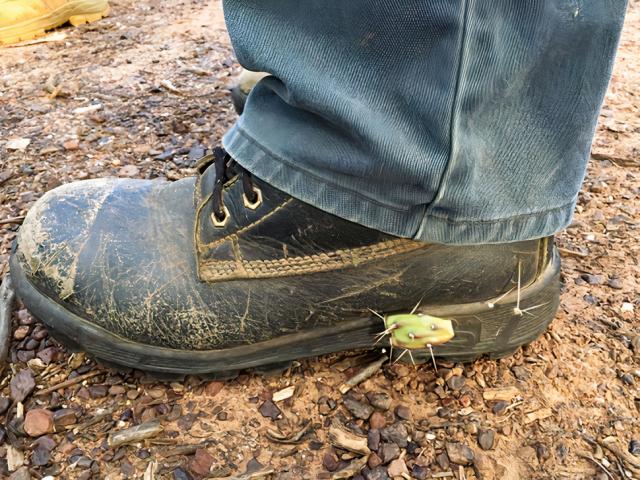
* Supply footwear or personal protective equipment (PPE) for farm workers and ensure footwear is left on farm reducing risk of contamination.

* Have spare boots and overalls for visitors and contractors and keep a record of people entering the property including their contact details, areas visited and previous contact of farm animals.

* Provide an area for washing with a wash tub, scrubbing brush and disinfectant to clean boots or equipment. Any household or general detergent is also fine.

* Manage feral, pest animals and weeds by storing feed securely, cleaning spilled feed and keeping areas around buildings and production areas clear of long grass and clutter.

* Prevent nose to nose contact between your livestock and other animals. This can be achieved by not grazing boundary paddocks while neighboring livestock are grazing the adjacent paddock, or by planting shelterbelts along boundaries.

* Allow only essential people into areas with young stock. Have a separate set of farm clothing/boots to wear around young stock and clean them regularly.

* Match frequency of inspections to periods of higher risk, such as calving or lambing, increased insect and feral animal activity, and after rain events or natural disasters.

Agriculture Victoria is hosting a number of biosecurity planning workshops and webinars over the next few months. Visit agriculture.vic.gov.au/events for details.

Digital Editions


  • Maskiell, Munro and Midge

    Maskiell, Munro and Midge

    DAVE: Good morning boys, welcome back to another edition of LTS. It’s always great when I get to wear my Collingwood polo on a Monday…

More News

  • Hit to helmet proves costly

    Hit to helmet proves costly

    **Just when you thought the Premier relegation battle between DEVON MEADOWS and UPPER BEACONSFIELD couldn’t get any closer, there was an odd moment towards the end that may have helped…

  • Cannons set to launch into season 2026

    Cannons set to launch into season 2026

    Purchase this photo from Pic Store: 497922 Hockey is nearing its return date and it is all systems go at Casey Cannons with the club set to host its season…

  • Panic-buying despite 24-hour fuel price cap

    Panic-buying despite 24-hour fuel price cap

    As concerns increase regarding fuel prices across the state with warnings against panic buying, one of Casey’s cheapest fuel stations in Cranbourne has run out of U91 fuel and diesel…

  • Community figure Rob Wilson recovering

    Community figure Rob Wilson recovering

    Purchase this photo from Pic Store: 225295 Former City of Casey mayor and long-time community figure Rob Wilson is recovering after suffering a significant stroke just before Christmas, with family…

  • Seth has immediate impact

    Seth has immediate impact

    Seth O’Hehir had quite the impact in his 54 balls of batting and 12.1 overs of bowling for Kooweerup A Grade this season. That’s all it took – in his…

  • Lakers remove Knights’ armour, Bloods too good for Bucks

    Lakers remove Knights’ armour, Bloods too good for Bucks

    Purchase this photo from Pic Store: 535994 It was a disappointing end to the season for Keysborough in the DDCA Turf 3 competition after the Knights were bowled all out…

  • Nervous Panthers stay up

    Nervous Panthers stay up

    A relegation standoff so tense the rule book had to be brought out. Devon Meadows survived one of the most memorable yet gruelling run chases in Casey Cardinia Cricket Association…

  • Gallant Swans fall short

    Gallant Swans fall short

    Purchase this photo from Pic Store: 537210 An enthralling two days of action at Mervyn Hughes Oval saw the qualifying final matchup of Casey South Melbourne and St Kilda come…

  • Cranbourne public housing tenant takes mould dispute to VCAT

    Cranbourne public housing tenant takes mould dispute to VCAT

    Purchase this photo from Pic Store: 538359 A Cranbourne public housing tenant said his two-year-old son cannot live with him because of severe mould contamination in his home, despite the…

  • Armed duo attempt carjack in Hallam

    Armed duo attempt carjack in Hallam

    Casey Crime Investigation Unit detectives are investigating after two men armed with knives attempted to carjack a vehicle in Hallam last month. A 20-year-old male driver was at the intersection…