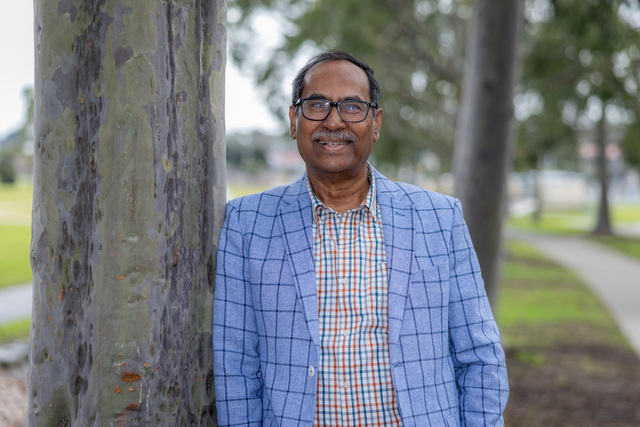
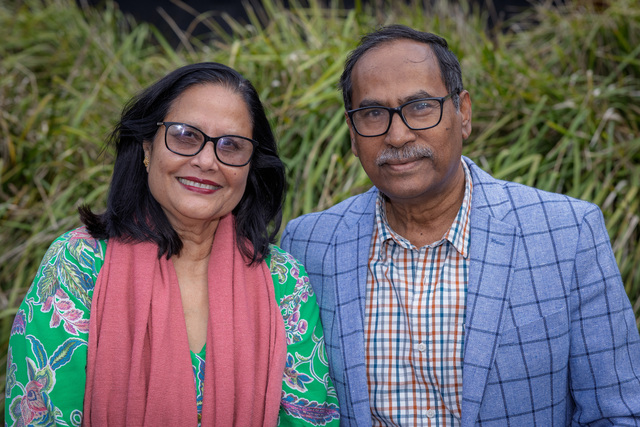
Service to others is the rent you pay for your room here on earth. In Pakenham and across Australia, Rabby Lutfur lives by this principle, dedicating his life to supporting and uplifting his community.
B“I hope people can recognise my contribution to society. People’s recognition is the greatest achievement in my life,’ he said.
Rabby Lutfur was born and raised in a small village in Bangladesh, where poverty and hardship were a daily reality.
“There was no electricity, no water or gas supply. We had to use wood fire for cooking, a hariken lamp for light and a tube well for water,” Rabby recalled.
“During the rainy season, it was very difficult to leave the house because the roads became muddy and slippery.”
Yet, those early hardships didn’t overshadow the joy of his childhood. Rabby fondly remembers playing football, cricket, badminton, and swimming with friends from his village.
His large, close-knit family also filled his early years with love, laughter, and a deep sense of belonging.
His father served as a police officer, while his mother worked in the government’s social welfare department.
Driven by a passion for learning, Rabby completed his secondary education at an Intermediate Technical College, specialising in Pre-Engineering studies. He went on to earn a Bachelor’s degree in Physics with Honours, followed by a Master’s in Physics from Dhaka University.
While at university, he was elected General Secretary of the Physics Association. In this leadership role, he focused on student welfare, discipline, and the organisation of sports and academic events — laying the foundation for a lifelong commitment to service.
After graduation, Rabby joined the Bangladesh Standards and Testing Institution (BSTI) under the Ministry of Industries as an Inspector. In 1985, he was selected for a prestigious six-month training program in Australia, sponsored by the National Measurement Institute (NMI). That visit proved life-changing.
“I worked hard to develop my organisation BSTI in Bangladesh,” he said. “BSTI – Metrology Laboratory is traceable to International standards.”
But it was his time in Australia that sparked something deeper.
“At the end of the training program, I felt Australia was my country,” Rabby recalled. “It had a good environment, beautiful nature, and developed infrastructure — all of it attracted me to come to Australia.”
In 1995, he migrated to Australia under the skilled migration program, stepping into a new life full of hope and uncertainty.
Despite his qualifications, finding work was difficult. It was a frustrating chapter, but his resilience never wavered. He went on to complete a second Master’s degree at Monash University and expressed deep gratitude for the government support that helped him settle in those early days.
While many migrants struggle with a sense of identity and belonging in a new country, Rabby’s experience was different.
“Australia is a truly multicultural society where we’re encouraged to celebrate our culture and organise community events,” he said.
“We have a strong Bangladeshi community in Victoria, and many of our friends and relatives are well established. I was able to share my experiences with others and help blend our culture into the wider community.”
From the beginning, Rabby supported his family’s settlement and engaged in grassroots community work.
He became actively involved in Bangladesh Samity Victoria, served as Vice President from 1996 to 1997.
“We did a lot of community work for the wellbeing of new migrants, helping them for settlement in their primary stage. Bangladesh Samity actively played a role in connecting to other cultural communities,” Rabby said.
“I hope people can recognise my contribution to society. People’s recognition is the greatest achievement in my life. I want to keep myself busy doing work in the community as long as I can.”
He also became active in the Renesa Drama Society, a Bangladeshi theatre group in Melbourne. As Vice President and stage performer, he embraced the arts as a powerful tool for storytelling, cultural pride, and community unity.
One of his greatest ambitions is to improve the lives of seniors, a group he believes is too often overlooked and undervalued.
“Everyday challenges for the elderly include physical and mental health issues, ageism, and financial insecurity. Their contributions are invaluable but often go unrecognised,” Rabby said.
“Showing love and respect is fundamental in elderly care. Treating senior citizens with kindness, patience, and understanding is essential to making them feel valued.”
He is making a difference as president of the Bangladeshi Senior Citizens Club, Victoria (BSCCV), which supports mostly retired and elderly members. Many face challenges such as night driving and limited public transport access. In his role, Rabby ensures regular contact with members, organises transport to events, and arranges expert talks to educate members.
He also champions social connection, organising outings and programs to promote friendship and well-being.
Alongside his work with seniors, Rabby holds a deep and enduring passion for culture. Though he calls Australia home, he has never let go of his Bangladeshi roots.
“It is important for the next generation to know Bangladeshi cultural roots is crucial for the next generation as it fosters a strong sense of identity, belonging and cultural understanding,” he said.
“While also promoting empathy and preparing them for a globalised world. Preserving heritage, language, and traditions ensures cultural continuity and prevents cultural assimilation.
“Community organizations also play a crucial role in offering language classes and cultural events. This blend of tradition and modernity allows younger generations to connect with their roots.”
Bangladeshi Australians celebrate key events such as Pohela Boishakh, Eid, International Mother Language Day, Christmas, and New Year, which foster community spirit and cultural pride.There are currently three Bangladeshi schools in Victoria offering Bangla language education up to VCE level.
Rabby sees culture as a bridge that connects generations and communities, preserving heritage and language not just for remembrance, but to empower the future.
“My expectation is that the Bangladeshi community in Australia is expected to evolve through increased cultural preservation, stronger community networks, and greater economic and social contributions.”