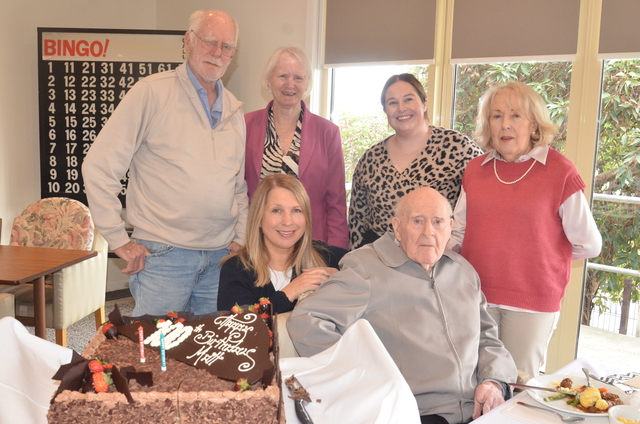
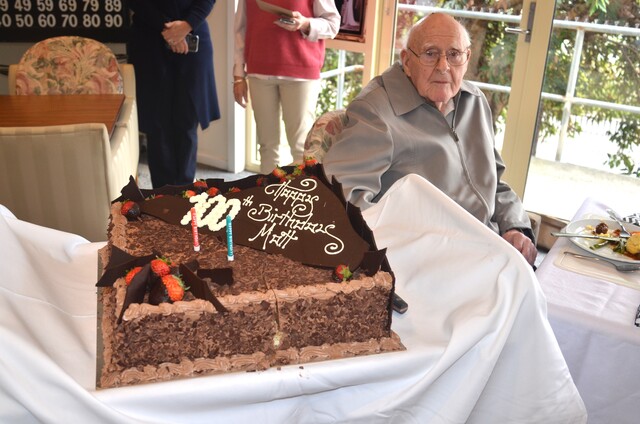
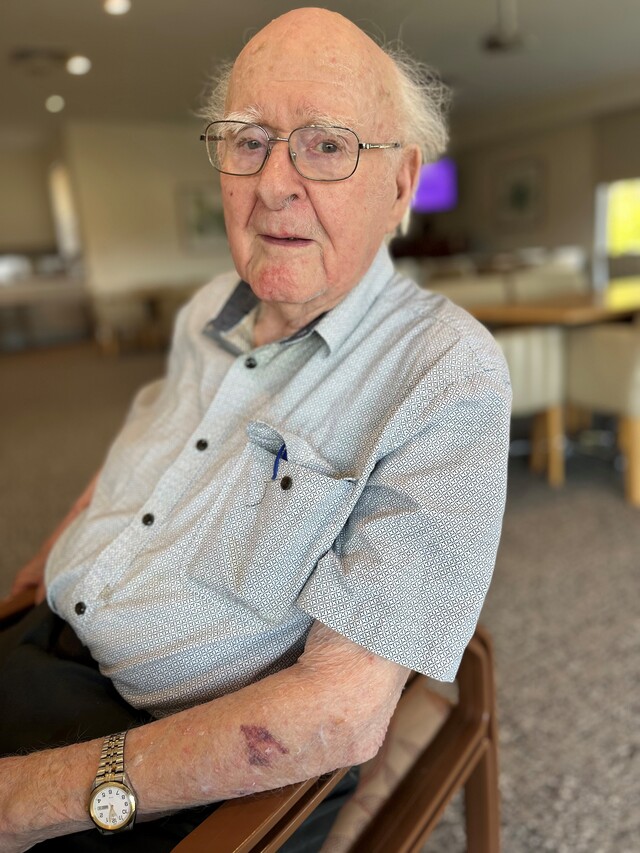
From a humble wheat farm to the skies of World War II, 100-year-old Matthew Moore’s life is a testament to resilience, service, and simple values that stand the test of time.
“Even at 100, he’s one of the real characters of Meadowvale, and we’re proud to celebrate this incredible milestone with him,” Matthew said.
In early 1942, Matthew Moore completed a two-year course at Agricultural College before returning to his family’s farm in Pingrup, a small rural town approximately 400 kilometres southeast of Perth.
Moore’s father, World War I veteran and newly married man at the time, had taken on the formidable task of developing a wheat farm from a 1,500-acre block of untouched land. The property had been acquired through a government in 1925, the year Matthew was born.
With limited resources and harsh conditions, he worked tirelessly to establish the farm and lay the foundations for what would become the family’s livelihood.
By the time Matthew returned to the family farm in 1942, his father was approaching his early sixties and in urgent need of assistance to continue developing the property.
The timing could not have been more precarious. Just months earlier, the attack on Pearl Harbor had occurred, and Japan was rapidly advancing through the Pacific, sparking fears of a Japanese invasion of Australia.
In response, the rural community of Pingrup established a branch of the Volunteer Defence Corps (VDC). Each Sunday, the majority of the town’s adult men, led by returned servicemen including Matthew’s father, gathered for drills and strategic planning to defend the area.
Though Matthew attended these sessions with his father, he was under eighteen and therefore ineligible for official membership.
Midway through 1942, Matthew received a letter from the Royal Australian Air Force (RAAF) headquarters inviting him to join the Air Training Corps, a preliminary training program for 17-year-olds aiming to enlist in the RAAF. His father had submitted the application on his behalf.
Matthew’s father had submitted the application on his behalf, driven by a desire to support Australia’s defence efforts during a time when the threat of Japanese expansion loomed large.
Given the critical role of agriculture in sustaining the nation during wartime, government policy restricted farm workers from enlisting in the Armed Services unless they were accepted for training as airmen in the Royal Australian Air Force (RAAF).
For Matthew, the opportunity to train as a pilot was a dream come true and he signed up immediately.
Because the ATC was designed mainly for city boys, rural participants like Matthew received educational materials by mail and had some practical requirements waived.
Having completed primary education by correspondence, Matthew found the coursework manageable and studied regularly while assisting his father full-time on the farm.
Before Christmas 1942, Matthew sat a final exam supervised locally by the schoolteacher and passed. However, the demands of wheat planting delayed his enlistment.
By his eighteenth birthday in May 1943, the demands of wheat planting had taken full priority, and the RAAF was far from his mind. That changed just two weeks later when a letter arrived, along with train tickets, instructing him to report to the RAAF in Perth for a medical examination.
Matthew underwent a medical exam and was enlisted into the RAAF, beginning initial training at Clontarf in Perth.
After six weeks of classroom lessons and drills, he was selected as a Wireless Operator/Air Gunner.
He then completed seven months of intensive training in Ballarat, learning Morse code and radio communication, followed by six weeks of Air Gunner training in West Sale.
Upon graduation, Matthew earned his Air Gunner brevet and sergeant’s stripes and was posted to 67 Squadron at Laverton Aerodrome. His duties included patrolling shipping lanes off Victoria’s coast, searching for enemy submarines — accumulating 1,000 hours in aircraft during the war.
After three months with 67 Squadron, Matthew qualified for three weeks’ leave. He flew from Laverton to Perth to visit his family, returning late due to travel delays.
Upon arrival back in Melbourne, he learned he had missed a posting to Bomber Command in London — the ship had departed ten days earlier.
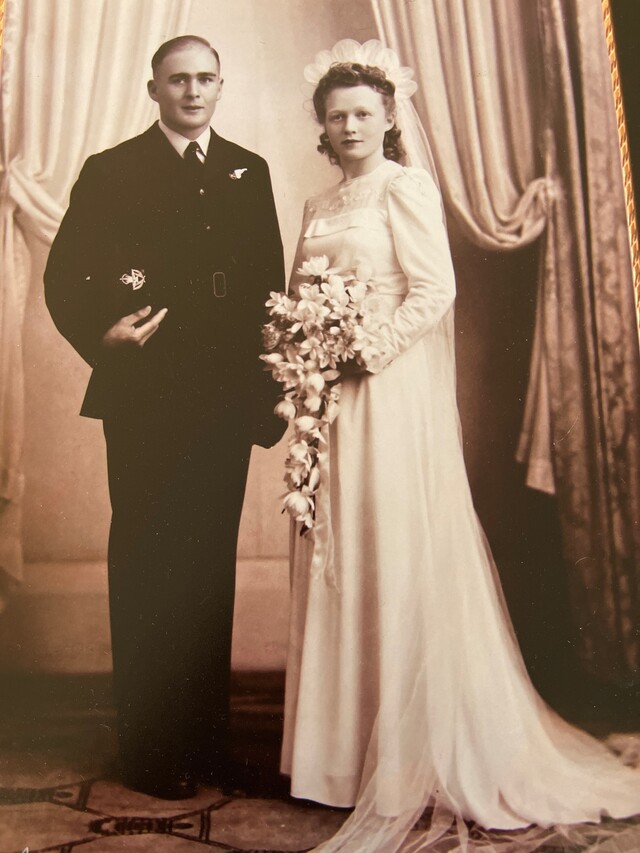
Though initially disappointed, Matthew later saw the delay as a blessing. At the time, he had been dating Joan for six weeks; had he gone to London, their relationship likely would have ended. Instead, they married, and he avoided the dangerous fate many airmen faced overseas.
Matthew served in the RAAF from 3 July 1943 to 4 June 1946 and attained the rank of Warrant Officer in 36 Squadron.
After a life of service, he has spent the past 13 years living at Meadowvale Retirement Village in Pakenham.
“When Dad first arrived, he was still driving and very active,” his daughter Janice said.
“He was involved in photographic organisations, took countless photos, and entered them in both local and international competitions — even earning commendations.”
Matthew also used his computer skills to produce the village newsletter, staying sharp and engaged with the community.
Janice acknowledged the vital role played by Keyton, the organisation behind Meadowvale, and the staff who have supported her father as he aged.
“Around the age of 90, Dad’s mind began to slow down,” she said. “That’s when the staff here really stepped in. They’ve been incredibly supportive and helped him get to where he is today.”
As an only child, Janice added that the support extended to her as well.
“They’ve guided me through navigating aged care and everything that comes with it. Honestly, the reason Dad is still able to live here comfortably is thanks to Meadowvale.”
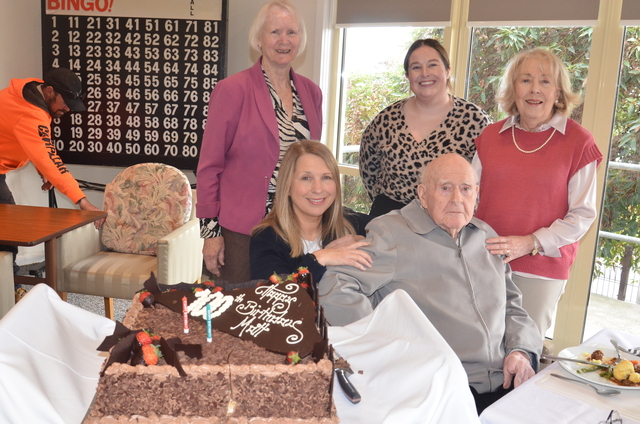
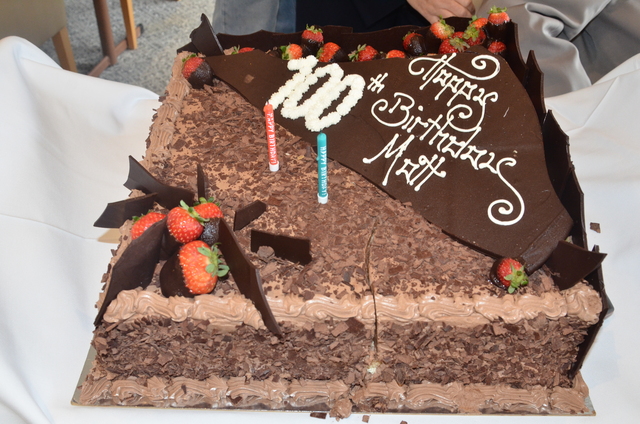
On May 8, Matthew celebrated his 100th birthday at the retirement village with close family and a small presentation.
Meadowvale manager Franco Tedesco praised Matthew’s character and enduring spirit.
“Matt is a true gentleman and incredibly resilient,” Franco said. “He’s also part of our veteran group here, having served as a pilot during the war. On Anzac Day, he proudly laid the wreath alongside our other veterans — it was a great moment of recognition for Matt, and he really understood the significance of the occasion.”
Despite his age and health challenges, Matthew remains mentally sharp and engaged in the community.
“He’s still very much with it cognitively,” Franco said. “Even at 100, he’s one of the real characters of Meadowvale, and we’re proud to celebrate this incredible milestone with him.”
When asked about his longevity, Matthew credits his long life to growing up on a farm, leading a simple life with plenty of healthy food. He exercised regularly and lived by strong principles of truthfulness and honour.
Janice reflected on what society can learn from her father: “Looking after your body is key — exercise, eating well, and maintaining a positive frame of mind.”