A proposed $250 million Hindu temple precinct in Cranbourne South’s green wedge has been referred to the Federal Government, with a decision now pending on whether the project requires Commonwealth approval under national environmental law.
BAPS Swaminarayan Sanstha Australia proposed a Hindu temple precinct (BAPS Hindu Mahã-Mandir) that would take about 44 ha across 1390-1450 Western Port Highway in Cranbourne South.
Key components of the precinct include places of worship, welcome centres, an exhibition centre, security buildings, a gift shop and café, and thematic gardens.
A total of 1500 car parking spaces is proposed for the site.
The disturbance footprint will be about 34 ha, which will impact 3.39 ha of native vegetation and remove fauna habitat for threatened species through the action of direct vegetation clearing for the construction of permanent roads, carparks, wetlands and buildings.
Under the Environment Protection and Biodiversity Conservation Act 1999 (EPBC Act), projects must be referred to the Federal Environment Minister if they may significantly impact a Matter of National Environmental Significance, such as threatened species habitat in this case.
If the minister determines a proposal is a “controlled action”, the entire project cannot proceed without federal approval, in addition to any state planning approvals.
The applicant states that the development is not believed to be a “controlled action” under the EPBC Act.
It is stated that while some habitats within the project area were initially considered to be present for a few EPBC Act-listed fauna species, no EPBC Act-listed threatened flora or fauna species were recorded following targeted surveys.
However, Glossy Grass Skink (listed as endangered in Victoria under the FFG Act) was recorded within the project area during targeted surveys. This species is anticipated to be uplisted to the EPBC Act threatened list later in 2025, and a report found that the proposed action could have significant impacts on the species.
The applicant elaborates in the referral that impacts on Glossy Grass Skink are anticipated to be mitigated.
The proposed mitigation measures include habitat creation and enhancement outside the construction footprint, as well as a wildlife management plan involving salvage and translocation of skinks once suitable habitat is established.
Therefore, the applicant doesn’t think the proposed development is a “controlled action”. No offsets are proposed as part of this referral.
The proposed precinct will operate from 9am to 8pm from Tuesday to Sunday. Last entry will be by 5.30pm.
The estimated number of visitors per day will be 2200 to 2800 on weekdays, 4500 to 5000 on weekends, and up to 10500 on long weekends and holidays.
Construction is proposed to begin in 2027 and continue until 2032.
The relevant planning permit on the temple precinct is not currently being advertised at the Casey Planning Register.
BAPS Swaminarayan Sanstha Australia has a local branch in Cranbourne South, which engages in charity activities locally.
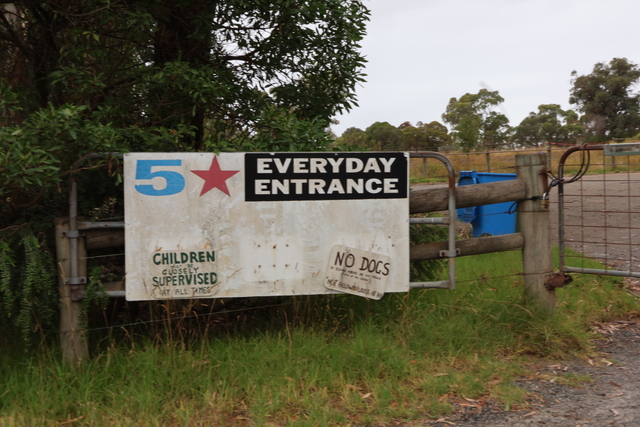
The applicant proposed a cultural event at the old Five Star Equestrian Centre, a part of the proposed site, earlier this year, which met strong opposition from the local green wedge community.
The locals told the Star News back then about the traffic concerns.
The applicant later withdrew the proposal.
Casey Residents and Ratepayers Association (CRRA) president Anthony Tassone said the Association’s concerns were not about religion or belief, but about land use, environmental protection and the long-term impacts of large-scale development in a sensitive Green Wedge location.
“Those visitation levels are comparable to a major metropolitan destination,” he said.
“Local residents are understandably concerned about what that means for traffic, noise, lighting, environmental disturbance and the gradual urbanisation of land that is meant to remain non-urban.”
Mr Tassone also pointed to referral material identifying habitat capable of supporting threatened species, including the Glossy Grass Skink and Southern Brown Bandicoot, and argued that potential impacts should be assessed at a broader landscape level, not just within the construction footprint.
CRRA has called on the Commonwealth to apply the precautionary principle and determine the proposal as a controlled action under the EPBC Act, requiring a full federal environmental assessment, or alternatively, refuse the project.
The public consultation will close on Friday 19 December.
To submit your comments, visit: https://epbcpublicportal.environment.gov.au/all-notices/project-decision/?id=f153d3b1-64d1-f011-bbd3-7c1e528a0b4a