Pharmacists will gain wider presciption powers under the expansion of the Community Pharmacist Pilot program, which has stirred discontent in the health sector.
Once a trial in October 2023, the CPP program is set to be a permanent fixture from 1 July, as announced in the 2025-’26 state budget among other health sector investments.
The Royal Australian College of GPs (RACGP) has warned the State Government against the program’s expansion due to patient safety concerns, despite the reported success of the trial.
RACGP state chair Dr Anita Munoz said that patient care will be compromised and has labelled the move as “not the right solution”, “cheap” and an “easy fix.”
“Patient safety must come first ahead of pharmacy owner profits.
“Patients are better off booking a consult with a regular GP who knows them and their history.
“GPs value the work of pharmacists in communities across Australia…however pharmacists don’t have the training required to properly diagnose medical conditions, and this raises the risk of inappropriate treatment, as well as misdiagnosis.”
She said a GP spends a decade training to diagnose conditions, something that is not “easily taught over a few weeks via an online course.”
Health conditions covered under the pilot program was for shingles, mild plaque psoriasis, uncomplicated urinary tract infections, travel health vaccinations and resupply of select oral contraceptive pills without prescription.
The expansion of the program will add 22 everyday health conditions including asthma, nausea, ear infections, wound management and type 2 diabetes.
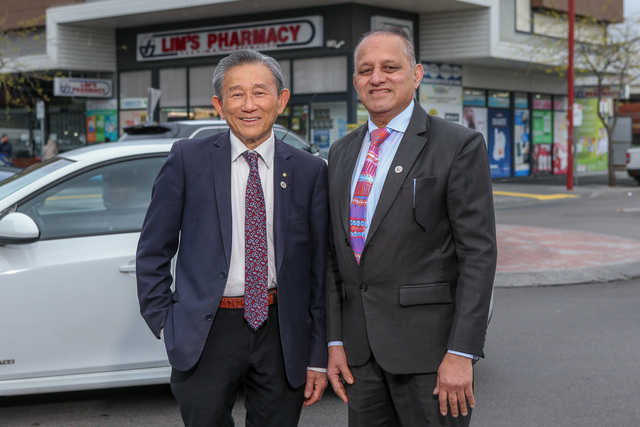
Richard Lim OAM, a pharmacist and former deputy mayor of City of Greater Dandenong, was one of the first to join the CPP program.
His staff members speak a total of seven languages providing an accessible service with clear communication, he says.
He rejects claims of potential misdiagnoses by pharmacists and any patient threat as a result.
“A lot of people attend the pharmacy because we can give them medicines without a GP prescription to help ease the pressure from the system, but for more serious conditions we will send them to the GP.
“The GPs don’t understand the benefit they receive from the pharmacist.
“As an allied profession we need to work together for the benefit of our community.
“If there’s anything we can’t prescribe we always refer them to the GP. Mostly we do refer them to the GP and then they receive the prescription.”
The CPP program potentially saved patients from waiting for days before they could see a GP.
Senior lecturer at the RMIT University Dr Julie Stevens acknowledges the independent evaluation of the program after its first 12 months of service delivery.
She says the report suggested the pilot was able to improve access to care with 93 per cent of respondents receiving care within 24 hours independent of its location.
However, she also says all prescribers regardless of their discipline must be “adequately trained in both diagnosis and treatment of conditions.”
“Pharmacists participating in the service must successfully complete specified training for each of the specific clinical streams listed within the program before providing services.
“Additionally, pharmacists used evidence-based clinical guidelines in the delivery of the services.
“Adequate training puts patient safety as the priority, and pharmacists understand the limitations of their scope of practice and when to refer on to a GP or other medical professional.
“While we all agree that patient safety is of paramount importance, access to timely, quality care is important too.”
The independent report on the pilot also reported no serious patient safety concerns.
Previously, 39 per cent of patients waited for 24 hours or more for a medical appointment for urgent care needs according to the Australian Bureau of Statistic.
In the 12 months of the pilot, 87 per cent of respondents who received care said they would’ve used a GP service if the pilot was not available.
There’s no out-of-pocket cost for patients to visit a community pharmacy for a consultation for the expanded healthcare services.
The Pharmacy Guild of Victoria welcomed the news as “a win for every Victorian.”