Pregnancy and parenthood are supposed to be joyous times – but for many families, Covid-19 restrictions have dampened that happiness or even contributed to deeper challenges.
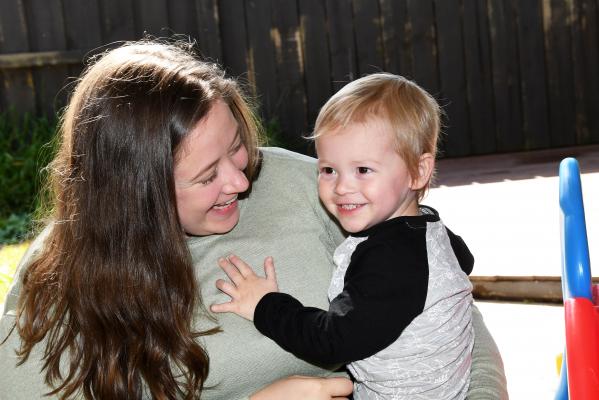
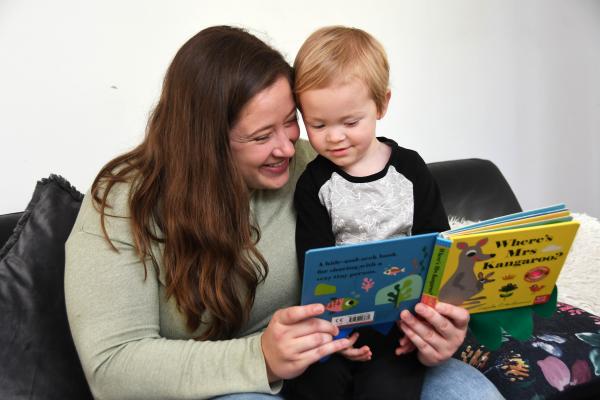
Pearcedale mother Jade Tolhurst’s son Oscar was born at the end of 2019, and the past 18 months have been defined by constant lockdowns.
“I was very lonely. My family lives in Adelaide so I wasn’t able to see them for pretty much all of 2020,” she explained.
“I missed out on those mums’ groups and catching up with friends. It was very isolating.”
Sleep deprivation from her newborn combined with a deep depression left her feeling sick to the stomach every evening.
For the first few months of motherhood, she didn’t realise that her symptoms were developing into something more than just loneliness.
A friend eventually noticed and reached out to Ms Tolhurst, and she was diagnosed with post-natal anxiety and depression.
Her story is, unfortunately, not unusual; new research has revealed that Covid-19 has had a detrimental impact on expectant and new parents.
The research, by Gidget Foundation Australia, reveals more than a third (39 per cent) of parents who have been pregnant during Covid-19 report that the pandemic and lockdowns have had a significant impact on their mental health, while almost half (43 per cent) of expectant parents have struggled with limited access to their support networks throughout the pandemic.
Gidget Foundation Australia chief executive officer Arabella Gibson said the results from the research were not all that surprising, and really highlighted how much additional stress the pandemic had placed on expectant mums.
“One in three Australians who are currently expecting a baby admit to being nervous about going to hospital for fear of catching Covid-19,” she said.
“Most women during pregnancy are worried about going to hospital to give birth, but sadly the pandemic has just added an additional layer of stress and heightened fear to the whole experience.
“It is tragic that many women will have to look back on their experience of being pregnant and remember the masks, sitting in waiting rooms alone and not being able to have visitors come visit them and meet their new bundles of joy.
“These might sound like trivial things, but psychologically, it’s not the pregnancy experience that women will have envisioned, and that can be hard to accept,” Ms Gibson said.
Despite universal screening being in place, concerningly, one in five women in Australia are not screened antenatally and postnatally for depression and anxiety, and changes in perinatal healthcare services due to Covid-19 have resulted in expectant parents relying on telehealth to provide stable and constant support.
Knowing the importance of addressing mental health issues quickly, Ms Tolhurst called PANDA – Perinatal Anxiety and Depression Australia – for support.
A trained counsellor listened to her and validated her feelings, before letting her know the next steps to take.
She also made use of their online checklist to think about her symptoms.
She visited her GP and was placed on a mental health plan, and began seeing a psychologist over Zoom.
“It’s important, once you notice those signs, to get help,” Ms Tolhurst said.
She said she is still “up and down”, but doing her best under the circumstances.
She’s glad that mental health is being “normalised” and that more people, like herself, are speaking up about their experiences.
But Ms Tolhurst believes more can be done to support mothers.
“I definitely think there needs to be more postpartum support.
“At your maternal and child health checks they do give you a mental health checklist if I remember correctly, but what I’ve heard from other mums is people lie on those, they don’t want to say they’re struggling as a mum.
“If mothers could meet with a counsellor as part of postpartum care I think that would be really helpful.”
Gidget Foundation Australia is calling for expectant and new mothers to reach out for help and support if they need it, to start talking and for communities to start listening.
With the additional pressures of the pandemic and limited access to support networks, expectant parents are also encouraged to download Gidget Foundation Australia’s free antenatal video and COVID-19 fact sheets, to help support them while they navigate pregnancy.
Find out more at https://gidgetfoundation.org.au/
If you need assistance, reach out to:
PANDA – 1300 726 306 or panda.org.au
Lifeline – 13 11 14 or lifeline.org.au